 Sentinel Alcohol Detox
Sober Living Willowcreek
1.1 mi, Sandy8190 South Willow Stream Drive, Sandy, UT, 84093
Active
- Residential
- Detox
- Medication-assisted treatment
- Medicaid
City
10 options near Cottonwood Heights, UT, nearest first. Compare services and locations, then call to check availability.
This number connects to our central helpline, not directly to a listed facility.
If you are searching for alcohol detox in Cottonwood Heights, you may be ready to take the first steps toward stopping alcohol use. The first day of detox typically involves an intake assessment where a medical team evaluates your health and the severity of your alcohol use. Call the program directly to ask what happens during an intake appointment and which services are available.

Detoxification is the process of getting alcohol out of your system safely. Because withdrawal can be dangerous, it should happen under medical supervision. Residential care is a longer-term, live-in program.
It treats the whole person, not just the physical symptoms. Outpatient care is part-time. You receive counseling and support while continuing your daily life.
Here is one way to think about it: If you wake up shaky and need a drink to function, start with detox. If you have tried quitting on your own but always go back within a week, consider residential. If you have been sober for a few days and need continued structure without leaving your job, look for outpatient.
What are your staff credentials? Is there a physician, psychiatrist, or addiction specialist on staff? How often will I meet with a counselor individually?
Do you offer family involvement or support groups? Can you prescribe medications like naltrexone or acamprosate for long-term recovery?
Across Utah, alcohol detox is frequently paid for using private insurance, but individuals should always verify with the facility whether their specific plan is accepted and what costs might remain. For those with limited income, public coverage options like Medicaid may apply, though confirming both eligibility and facility participation is necessary before admission. Sliding-scale fees are another common payment method, allowing costs to vary based on financial need, and self-pay is typically an option for those who choose to pay out of pocket.
Reach our free, confidential helpline any time, day or night.
A short conversation helps match you with the right level of care.
If needed, withdrawal is managed safely under medical supervision.
You leave with a clear plan for ongoing treatment and support.
Start with practical barriers. Does the program take your insurance? What is the wait time to get in?
How far are you willing to travel? Then focus on clinical fit. Do they treat your specific substance use history?
Do they have experience with your age group or gender? Call several programs and trust your gut: do they sound organized and caring on the phone? Do they answer your questions fully?
If you are searching for alcohol detox in Cottonwood Heights, you may be ready to take the first steps toward stopping alcohol use.

Withdrawal seizures can occur within 6 to 48 hours after your last drink. If someone has a seizure, call 911 immediately. Do not put anything in their mouth.
Move furniture away to prevent injury. Once the seizure stops, get them checked by emergency doctors even if they seem fine. The risk of a second seizure or delirium is high.
If you or someone else is in immediate danger, call 911 now.
8190 South Willow Stream Drive, Sandy, UT, 84093
Active
6196 South Holladay Boulevard, Salt Lake City, UT, 84121
Active
6771 South 900 East, Midvale, UT, 84047
Active
395 East 8000 South, Sandy, UT, 84070
Active
463 East 6865 South, Midvale, UT, 84047
Active
6280 South 725 East, Salt Lake City, UT, 84107
Active
4688 Namba Way, Salt Lake City, UT, 84107
Active
230 West Towne Ridge Parkway, Suite 150, Sandy, UT, 84070
Active
5282 South Commerce Drive, Suite D-110, Salt Lake City, UT, 84107
Active
3802 South 700 East, Salt Lake City, UT, 84106
Active
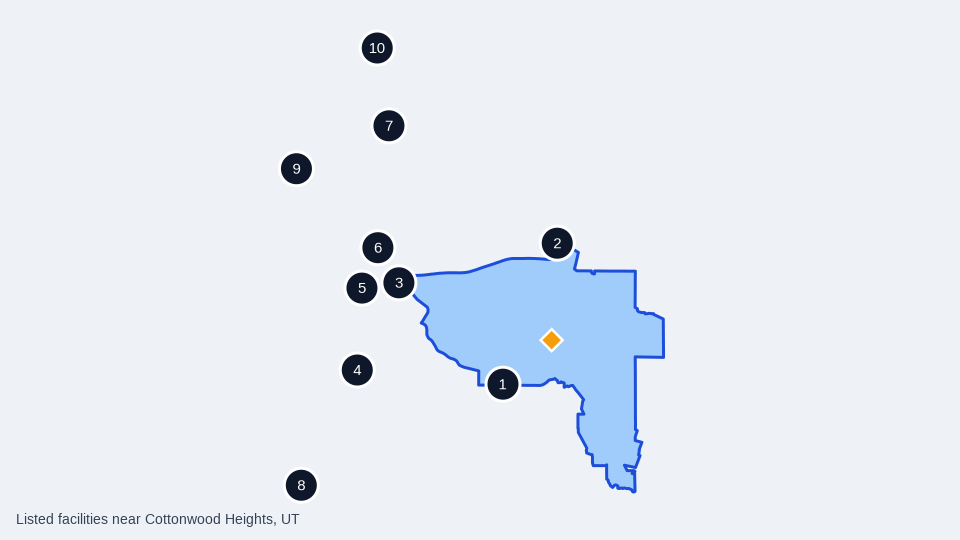
These lists use only what the 10 active facilities listed for Cottonwood Heights report to SAMHSA's FindTreatment.gov. No facility pays to be included or can ask to be moved. Reporting more options is not a measure of quality, outcomes or suitability for any person. A missing option means the facility did not report it to the source, not that it is not offered. Call the facility to confirm everything before relying on it.
How this list is made: each facility scores one point for each of these 5 levels of care (settings) it reports to SAMHSA's FindTreatment.gov (Residential (24-hour); Outpatient; Intensive outpatient; Partial hospitalization / day treatment; Hospital inpatient). A facility needs at least 3 to appear. Facilities are shown from the highest count to the lowest; facilities with the same count are in alphabetical order, which has no other meaning. Up to 10 are shown.
How this list is made: each facility scores one point for each of these 7 payment and cost-assistance options it reports to SAMHSA's FindTreatment.gov (Medicaid; Medicare; Private health insurance; Military insurance (TRICARE); Cash or self-payment; Sliding fee scale; Payment assistance). A facility needs at least 4 to appear. Facilities are shown from the highest count to the lowest; facilities with the same count are in alphabetical order, which has no other meaning. Up to 10 are shown.
How this list is made: each facility scores one point for each of these 4 medications used in treatment it reports to SAMHSA's FindTreatment.gov (Buprenorphine; Methadone; Naltrexone; Medication for alcohol use disorder). A facility needs at least 2 to appear. Facilities are shown from the highest count to the lowest; facilities with the same count are in alphabetical order, which has no other meaning. Up to 10 are shown.
How this list is made: each facility scores one point for each of these 12 age groups and client groups accepted it reports to SAMHSA's FindTreatment.gov (Adolescents; Young adults; Adults; Seniors; Pregnant or postpartum women; Adult women; Adult men; Veterans; Active duty military; Criminal justice clients; Clients who have experienced trauma; Co-occurring mental and substance use disorders). A facility needs at least 5 to appear. Facilities are shown from the highest count to the lowest; facilities with the same count are in alphabetical order, which has no other meaning. Up to 10 are shown.
Consider whether the program offers medical supervision to manage withdrawal symptoms safely. Ask about the types of counseling or support groups available. Call a few programs to find one that matches your needs and schedule.
Detox length varies depending on the person and the severity of alcohol use. It often lasts several days to a week. Ask the program for a typical timeline and what a day in their program looks like.
Not always, but many programs use medications to ease withdrawal. Benzodiazepines are common to prevent seizures. You may also receive vitamins like thiamine to prevent brain damage. Your medical evaluation will determine what you need.
Many do. The Affordable Care Act considers substance use treatment an essential health benefit. You will need to check with each program and your insurance provider about coverage. Some facilities also offer sliding-scale fees or payment plans.
No, you do not. Call while you are still drinking if you have concerns. The program staff will do a phone assessment and tell you if they can help. They may instruct you to keep drinking until you are admitted—stopping abruptly can be dangerous before medical supervision begins.
Last updated