 Sentinel Alcohol Detox

1620 Riverside Drive, Bethlehem, PA, 18015
Active
- Residential
- Detox
- Medication-assisted treatment
- Medicaid
City
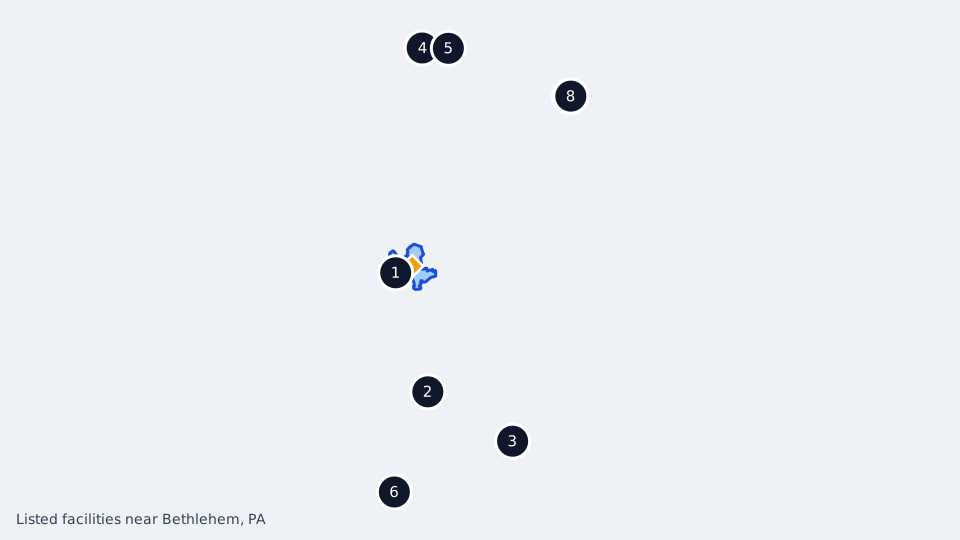
8 options near Bethlehem, PA, nearest first. Compare services and locations, then call to check availability.
This number connects to our central helpline, not directly to a listed facility.
You will speak with a real person who understands what you are going through.
The call is free and confidential, with no obligation to move forward.
You will leave the call knowing exactly what happens next.
If you are looking into alcohol detox options in or near Bethlehem, you are taking an important step. People often come to this decision after recognizing that alcohol use has become harder to manage on their own, or after a health concern, a conversation with a loved one, or a personal turning point. The first day of a medically supervised detox program typically involves an assessment where a team reviews your health history and current needs.
This helps them understand what you are experiencing and plan for your safety and comfort during withdrawal. Care is provided around the clock, and medications may be offered to ease symptoms and prevent complications. The goal is to stabilize you in a calm, structured environment before transitioning to ongoing treatment.
Call (877) 712-7713
Detox is the first stop for most people who have been drinking heavily every day. It is a short stay, usually three to seven days, where nurses and doctors watch you while the alcohol leaves your body and treat the shaking, sweating, anxiety and sleep problems that come with it. Some people can do this at home with a clinic checking in on them, but if you have had seizures, hallucinations or DTs before, or if you drink in the morning to stop the shakes, you need a medical detox with staff on hand.
Residential rehab comes after detox. You live at the facility for a few weeks to a few months, go to counseling and group sessions all day, and stay away from the places and people that usually come with drinking. It costs more of your life, but it removes you from temptation while you build new habits.
Outpatient care means you sleep at home and go to treatment a few hours a day or a few evenings a week. It works best when you have a stable home, someone supportive there, and a drinking problem that has not landed you in the hospital. A simple way to choose: if stopping drinking makes you physically sick, start with detox.
If you cannot imagine staying sober at home next week, add residential. If your life mostly holds together and the drinking is the main thing coming apart, outpatient may be enough. You can also step down as you get stronger, from detox to residential to outpatient.
Call (877) 712-7713Round-the-clock medical monitoring while your body clears alcohol safely.
You live on site for weeks, with therapy and structure every day.
Scheduled sessions while you keep living at home and working.
Ongoing support and check-ins that help sobriety last.
Before you commit to anything, call the programs near you and ask the same questions of each. Ask when the next opening is and whether you can do the assessment over the phone today. Ask whether there is medical staff on site, especially overnight, and what happens if withdrawal gets worse than expected.
Ask what the daily schedule looks like, how long the program lasts, and what the total cost is with your insurance applied. Ask whether they use medication to treat withdrawal symptoms and cravings, or only counseling. Ask what happens after discharge, whether there is follow-up care, and how they handle a slip.
Ask what you should bring and what you cannot bring. Finally, ask whether family can visit or take part in counseling. Write the answers down as you go, because these calls blur together fast when you are stressed.
Across Pennsylvania, people typically finance alcohol detox through private insurance, which may require prior authorization; check with your insurer for coverage details. Public coverage through Medical Assistance (Medicaid) is available for eligible residents, including those under Pennsylvania's expansion, so confirm your status with the state. Many facilities also operate on sliding-scale fees based on your ability to pay and accept direct self-payment, ensuring you explore all financial options during intake.
Reach our free, confidential helpline any time, day or night.
A short conversation helps match you with the right level of care.
If needed, withdrawal is managed safely under medical supervision.
You leave with a clear plan for ongoing treatment and support.
Start with two hard filters before you compare anything else. First, can the program get you in now? A bed that opens in three weeks does not help you tonight, and motivation fades fast, so ask each place for its actual intake day and whether a phone assessment can be done today.
Second, can they handle medical withdrawal? If you shake, sweat or vomit when you stop drinking, you want a program with medical staff on site, not just counselors. After those two, compare on these points: whether they take your insurance and what your out-of-pocket cost would be, whether they offer medicine to ease withdrawal and cravings, how long the program runs and what happens after it ends, whether family can be involved, and whether they have experience with any other problem you have, like pain, depression or anxiety.
Visit if you can, or at least walk the place mentally from the phone call. If the person answering sounds rushed and judgmental, that tells you something. Good programs answer questions directly, tell you what to bring, and explain what the first day looks like.
Write down what each one says and compare later when you are calmer.
If you are looking into alcohol detox options in or near Bethlehem, you are taking an important step.

If you or someone with you is shaking hard, seeing things that are not there, badly confused, running a racing heart, sweating through clothes, or has had a seizure after stopping drinking, treat it as a medical emergency right now. Call 911 or get to the nearest emergency room. Do not wait for it to pass, do not drive yourself if you are impaired or shaking, and do not try another drink to calm things down.
Severe alcohol withdrawal can turn deadly within hours, and ER doctors treat it every day without judgment. Tell them plainly how much was being drunk and when the last drink was. Once the immediate danger is handled, the hospital can point you toward detox and rehab from there, so going tonight does not mean the process is over.
It means it is starting.
If you or someone else is in immediate danger, call 911 now.
Call (877) 712-77131620 Riverside Drive, Bethlehem, PA, 18015
Active
807 Lawn Avenue, Sellersville, PA, 18960
Active
1753 Kendarbren Drive, Suites 612, 621 and 622, Jamison, PA, 18929
Active
2455 Back Mountain Road, Scotrun, PA, 18355
Active
3437 Route 715, Henryville, PA, 18332
Active
100 Eagleville Road, Norristown, PA, 19403
Active
61 Ward Road, Blairstown, NJ, 07825
Active
61 Ward Road, Blairstown, NJ, 07825
Active
Free and confidential. Call any time.
These lists use only what the 8 active facilities listed for Bethlehem report to SAMHSA's FindTreatment.gov. No facility pays to be included or can ask to be moved. Reporting more options is not a measure of quality, outcomes or suitability for any person. A missing option means the facility did not report it to the source, not that it is not offered. Call the facility to confirm everything before relying on it.
How this list is made: each facility scores one point for each of these 5 levels of care (settings) it reports to SAMHSA's FindTreatment.gov (Residential (24-hour); Outpatient; Intensive outpatient; Partial hospitalization / day treatment; Hospital inpatient). A facility needs at least 3 to appear. Facilities are shown from the highest count to the lowest; facilities with the same count are in alphabetical order, which has no other meaning. Up to 10 are shown.
How this list is made: each facility scores one point for each of these 7 payment and cost-assistance options it reports to SAMHSA's FindTreatment.gov (Medicaid; Medicare; Private health insurance; Military insurance (TRICARE); Cash or self-payment; Sliding fee scale; Payment assistance). A facility needs at least 4 to appear. Facilities are shown from the highest count to the lowest; facilities with the same count are in alphabetical order, which has no other meaning. Up to 10 are shown.
How this list is made: each facility scores one point for each of these 4 medications used in treatment it reports to SAMHSA's FindTreatment.gov (Buprenorphine; Methadone; Naltrexone; Medication for alcohol use disorder). A facility needs at least 2 to appear. Facilities are shown from the highest count to the lowest; facilities with the same count are in alphabetical order, which has no other meaning. Up to 10 are shown.
How this list is made: each facility scores one point for each of these 12 age groups and client groups accepted it reports to SAMHSA's FindTreatment.gov (Adolescents; Young adults; Adults; Seniors; Pregnant or postpartum women; Adult women; Adult men; Veterans; Active duty military; Criminal justice clients; Clients who have experienced trauma; Co-occurring mental and substance use disorders). A facility needs at least 5 to appear. Facilities are shown from the highest count to the lowest; facilities with the same count are in alphabetical order, which has no other meaning. Up to 10 are shown.
It is a good idea to call the program ahead of time and ask what they recommend. Generally, you will want to bring a form of identification, your insurance card if you have one, a list of any medications you are taking, and comfortable clothing. Many programs provide a list of allowed items when you schedule your admission.
The length of detox depends on your individual situation, including how much and how long you have been drinking. Most medically supervised detox programs last between three and seven days. The program staff will monitor your progress and let you know what to expect as you move through the process.
It depends on how much and how long you have been drinking, and on your health. People with milder dependence often feel flu-like symptoms, anxiety, shaky hands and broken sleep for three to seven days, with the worst around the second or third day. If you have been drinking heavily around the clock for years, withdrawal can be more severe and can include seizures or confusion, so it is safer to be assessed by a medical detox program before stopping. Being medically supervised does not make you weak; it makes the first week survivable and more comfortable.
Not always, and that is important to know. Going cold turkey can be genuinely dangerous if you have been drinking heavily for a long time, because the body can react with seizures, hallucinations or dangerous changes in heart rate and blood pressure. If you drink daily, drink in the morning, or have had bad withdrawal before, talk to a doctor or a detox program before you stop. They can assess your risk and, if needed, give medicine that makes withdrawal safer and far more tolerable.
In most cases, yes. Rehab programs accept people who have already finished detox elsewhere, and the detox process transfers. When you call, tell them exactly where and when you detoxed and what medication, if any, you were given, because that changes how they start you. If you detoxed at a hospital, ask for your discharge paperwork and bring it to the intake appointment. If you are still finishing detox, some programs will hold a bed while you complete it, so it is worth asking about a reservation now rather than waiting until you are discharged.
Last updated