 Sentinel Alcohol Detox

Sandstone Care Richmond
2.5 mi, Glen Allen4880 Sadler Road, Suite 110, Glen Allen, VA, 23060
Active
- Day treatment
- Detox
- Medication-assisted treatment
- Private insurance
City
No listed facilities are in Wyndham. The nearest listed facility is 2.5 miles from Wyndham. Compare the facilities near Wyndham below; distances are straight-line estimates.
This number connects to our central helpline, not directly to a listed facility.
If you live in or near Wyndham and are looking for help with alcohol use, you may be wondering what the first step looks like. Most programs start with an assessment to understand your needs and discuss what kind of support might work best for you. Call the program to ask what their intake process involves, whether they offer medical evaluation, and what services are available for your situation.

Medical detox is a supervised program where doctors and nurses monitor your body while alcohol leaves your system. It manages withdrawal symptoms and keeps you safe. Detox alone is not treatment — it prepares you for the next step.
Residential rehab means you live at the facility 24/7 for several weeks. It provides structure, group and individual therapy, and peer support. Outpatient care lets you attend sessions during the day and return home at night.
It works for people who have stable housing and a supportive environment. You might start with detox or residential, then step down to outpatient. Or you may begin directly with outpatient if your drinking pattern is moderate.
A professional assessment can help you see which level fits your situation.
On the first call, ask if they offer a medical assessment before admission. Find out what type of therapy they use (individual counseling, group sessions, family involvement). Ask how long the program lasts and what a typical day looks like.
Clarify if they have a doctor or nurse on-site and how they handle withdrawal symptoms. Ask about aftercare planning — what support do they offer once you leave? Also, ask what insurance plans they accept and if they offer a sliding-scale fee.
Write down the answers so you can compare programs side by side.
In Virginia, individuals often fund alcohol rehab services through private health insurance plans, including employer-provided and individual marketplace policies, which may cover detoxification, residential care, and outpatient therapy. Public coverage such as Medicaid and Medicare is available for eligible residents, offering access to accredited programs, though benefits and provider networks vary, so confirming coverage before admission is essential. Many centers offer sliding-scale fees based on income and financial need, alongside self-pay options for those without insurance or with out-of-network care.
Reach our free, confidential helpline any time, day or night.
A short conversation helps match you with the right level of care.
If needed, withdrawal is managed safely under medical supervision.
You leave with a clear plan for ongoing treatment and support.
Look at location: how far are you willing to travel? Consider cost and whether they accept your insurance or offer payment help. Check if they provide the right level of care — detox, residential, or outpatient.
Think about the program length: short-term (30 days) or long-term (60–90 days). Ask what therapies they use. Evidence-based options like cognitive behavioral therapy (CBT), motivational interviewing, or 12-step facilitation are common.
Also consider whether they offer dual diagnosis treatment if you also have a mental health condition, such as anxiety or depression. Finally, ask to speak with a current or former client if possible. Real feedback is valuable.
If you live in or near Wyndham and are looking for help with alcohol use, you may be wondering what the first step looks like.

Severe alcohol withdrawal can be life-threatening. Symptoms like confusion, rapid heart rate, seizures, or hallucinations (seeing or hearing things that aren't there) mean you need emergency medical help immediately. If you or someone near you shows these signs, call 911 or go to the nearest emergency room right now.
Do not try to manage severe withdrawal alone at home. For immediate danger of harm to self or others, call 988 for the Suicide and Crisis Lifeline. Your safety is the first priority.
If you or someone else is in immediate danger, call 911 now.
4880 Sadler Road, Suite 110, Glen Allen, VA, 23060
Active
4212 Park Place Court, Glen Allen, VA, 23060
Active
4200 Parkplace Court, Glen Allen, VA, 23060
Active
4610 Stonebrook Court, Glen Allen, VA, 23060
Active
2810 North Parham Road, Henrico, VA, 23294
Active
2604 North Parham Road, Henrico, VA, 23294
Active
7702 East Parham Road, Suite 102, Henrico, VA, 23294
Active
9003 Quoacassin Road, Henrico, VA, 23294
Active
10299 Woodman Road, Glen Allen, VA, 23060
Active
8100 Three Chopt Road, Suite 101, Henrico, VA, 23229
Active
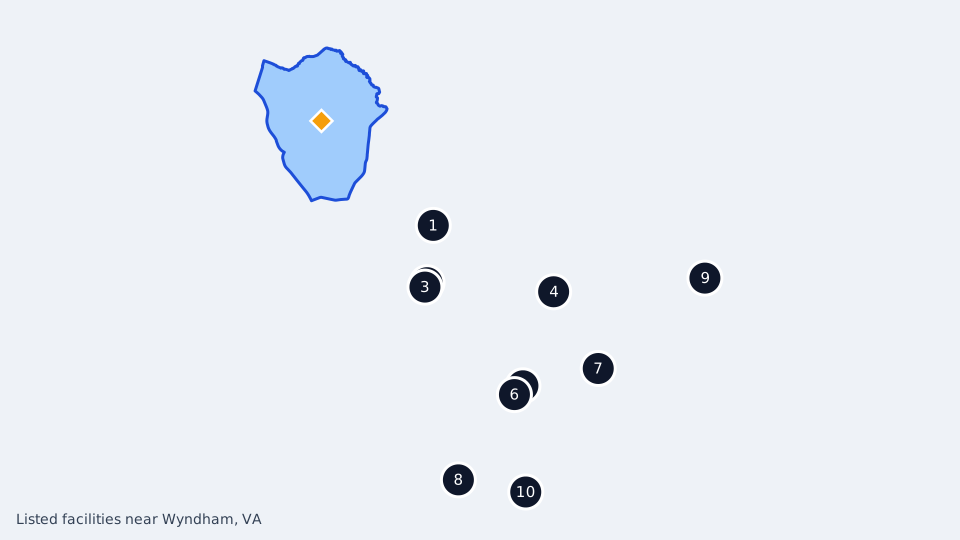
These lists use only what the 10 active facilities listed for Wyndham report to SAMHSA's FindTreatment.gov. No facility pays to be included or can ask to be moved. Reporting more options is not a measure of quality, outcomes or suitability for any person. A missing option means the facility did not report it to the source, not that it is not offered. Call the facility to confirm everything before relying on it.
How this list is made: each facility scores one point for each of these 5 levels of care (settings) it reports to SAMHSA's FindTreatment.gov (Residential (24-hour); Outpatient; Intensive outpatient; Partial hospitalization / day treatment; Hospital inpatient). A facility needs at least 3 to appear. Facilities are shown from the highest count to the lowest; facilities with the same count are in alphabetical order, which has no other meaning. Up to 10 are shown.
How this list is made: each facility scores one point for each of these 7 payment and cost-assistance options it reports to SAMHSA's FindTreatment.gov (Medicaid; Medicare; Private health insurance; Military insurance (TRICARE); Cash or self-payment; Sliding fee scale; Payment assistance). A facility needs at least 4 to appear. Facilities are shown from the highest count to the lowest; facilities with the same count are in alphabetical order, which has no other meaning. Up to 10 are shown.
How this list is made: each facility scores one point for each of these 4 medications used in treatment it reports to SAMHSA's FindTreatment.gov (Buprenorphine; Methadone; Naltrexone; Medication for alcohol use disorder). A facility needs at least 2 to appear. Facilities are shown from the highest count to the lowest; facilities with the same count are in alphabetical order, which has no other meaning. Up to 10 are shown.
How this list is made: each facility scores one point for each of these 12 age groups and client groups accepted it reports to SAMHSA's FindTreatment.gov (Adolescents; Young adults; Adults; Seniors; Pregnant or postpartum women; Adult women; Adult men; Veterans; Active duty military; Criminal justice clients; Clients who have experienced trauma; Co-occurring mental and substance use disorders). A facility needs at least 5 to appear. Facilities are shown from the highest count to the lowest; facilities with the same count are in alphabetical order, which has no other meaning. Up to 10 are shown.
When you call, ask what services they offer for alcohol use, what the intake process looks like, and whether they provide medical support. You can also ask about program length, what a typical day involves, and how they handle scheduling or privacy.
Coverage varies by plan and provider. Contact the program directly and ask which insurance plans they accept. You can also call your insurance company to ask about your out-of-network or in-network benefits for substance use treatment.
If you drink heavily every day or have tried to stop and felt shaking, sweating, or nausea, you may need medical detox first. Outpatient care works for people who drink less often and have a stable home environment. A doctor or an addiction specialist can help you decide by doing a simple assessment of your drinking history and withdrawal risks.
Yes, many outpatient programs are designed for people who work or have other daily responsibilities. Sessions usually happen in the evenings or on weekends. However, you need to be honest with yourself about whether you have a supportive place to return to after each session. If you find it hard to avoid drinking at home, residential care might be a better fit.
Most programs offer aftercare planning, which can include regular check-ins, outpatient groups, or referrals to community support like Alcoholics Anonymous. Some people also continue with individual therapy. The goal is to help you build a sober routine and prevent relapse. Ask the program about their aftercare options before you start, so you know what to expect.
Last updated