 Sentinel Alcohol Detox

Divine Hope Counseling
0.6 mi, Willmar328 3rd Street SW, Willmar, MN, 56201
Active
- Outpatient
- Medicaid
- Private insurance
- Self-pay
City
5 options near Willmar, MN, nearest first. Compare services and locations, then call to check availability.
This number connects to our central helpline, not directly to a listed facility.
If you are looking into alcohol rehabilitation in Willmar, you may have questions about how to get started. Many programs use an initial evaluation, often called an intake or assessment, to understand your situation and recommend a level of care. That first appointment is a chance to talk about your drinking patterns, any other health concerns and what you hope to achieve.
After that, the program can suggest a treatment plan, which might include regular individual or group counseling. Because every person's situation is different, the schedule and services can vary. Call the program to ask what happens during an intake appointment and which services are available.

Detox is medical monitoring while alcohol leaves your body. It lasts a few days to a week and handles physical withdrawal. Residential means living at the facility full-time for weeks or months, with daily therapy.
Outpatient lets you live at home and attend sessions a few times a week. You choose based on how much structure you need. If your drinking is heavy or you have had withdrawal before, start with detox.
If you can manage daily life but need support, outpatient might be enough.
What levels of care do you offer, and can I move between them if I need more or less support?
Paying for alcohol rehab centers in Minnesota commonly involves using private insurance from a workplace or the health insurance marketplace. Public health coverage, like Medical Assistance or MinnesotaCare, may be accepted, but it is essential to confirm your eligibility and what services are covered. Facilities often provide sliding-scale payment plans tailored to financial circumstances, and self-pay is another widespread choice.
Because policies and participation change, you must check directly with each center to understand their accepted payment methods.
Look at what each program requires for admission. Some need a detox note from a doctor; others do their own assessment. Ask about the daily schedule.
A good program has a mix of therapy, education and free time. Compare how long the program lasts. Some residential stays are 28 days; others go 90 days or more.
Outpatient programs vary by hours per week. Choose a program that fits your life, not just your calendar. If you have dual-diagnosis issues like depression or anxiety, find a program that treats both.
If you are looking into alcohol rehabilitation in Willmar, you may have questions about how to get started.

Severe alcohol withdrawal can be life-threatening. Confusion, rapid heartbeat, seizures, or hallucinations mean you need emergency medical help immediately. Do not wait to see if it passes.
Call 911 or go to the nearest emergency room. Do not try to detox on your own if you have a history of heavy drinking. Medical staff can make withdrawal safer with medications and monitoring.
You are not bothering anyone by going to the ER for this.
If you or someone else is in immediate danger, call 911 now.
328 3rd Street SW, Willmar, MN, 56201
Active
1125 SE 6th Street, Willmar, MN, 56201
Active
1125 6th Street SE, Willmar, MN, 56201
Active
201 28th Avenue SW, Willmar, MN, 56201
Active
1700 Technology Drive, Suite 203-2, Willmar, MN, 56201
Active
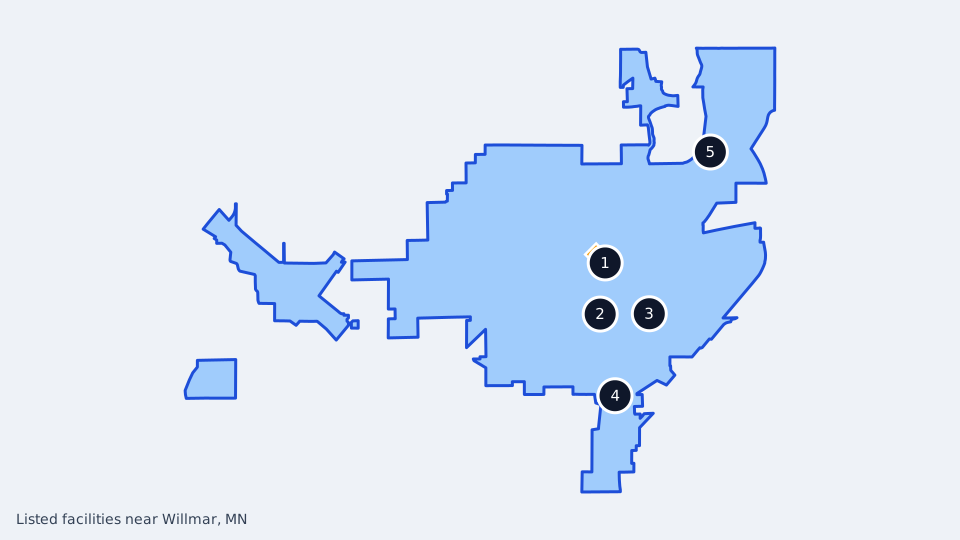
These lists use only what the 5 active facilities listed for Willmar report to SAMHSA's FindTreatment.gov. No facility pays to be included or can ask to be moved. Reporting more options is not a measure of quality, outcomes or suitability for any person. A missing option means the facility did not report it to the source, not that it is not offered. Call the facility to confirm everything before relying on it.
How this list is made: each facility scores one point for each of these 5 levels of care (settings) it reports to SAMHSA's FindTreatment.gov (Residential (24-hour); Outpatient; Intensive outpatient; Partial hospitalization / day treatment; Hospital inpatient). A facility needs at least 3 to appear. Facilities are shown from the highest count to the lowest; facilities with the same count are in alphabetical order, which has no other meaning. Up to 10 are shown.
How this list is made: each facility scores one point for each of these 7 payment and cost-assistance options it reports to SAMHSA's FindTreatment.gov (Medicaid; Medicare; Private health insurance; Military insurance (TRICARE); Cash or self-payment; Sliding fee scale; Payment assistance). A facility needs at least 4 to appear. Facilities are shown from the highest count to the lowest; facilities with the same count are in alphabetical order, which has no other meaning. Up to 10 are shown.
How this list is made: each facility scores one point for each of these 4 medications used in treatment it reports to SAMHSA's FindTreatment.gov (Buprenorphine; Methadone; Naltrexone; Medication for alcohol use disorder). A facility needs at least 2 to appear. Facilities are shown from the highest count to the lowest; facilities with the same count are in alphabetical order, which has no other meaning. Up to 10 are shown.
How this list is made: each facility scores one point for each of these 12 age groups and client groups accepted it reports to SAMHSA's FindTreatment.gov (Adolescents; Young adults; Adults; Seniors; Pregnant or postpartum women; Adult women; Adult men; Veterans; Active duty military; Criminal justice clients; Clients who have experienced trauma; Co-occurring mental and substance use disorders). A facility needs at least 5 to appear. Facilities are shown from the highest count to the lowest; facilities with the same count are in alphabetical order, which has no other meaning. Up to 10 are shown.
It is important to speak with a healthcare provider before stopping alcohol use, especially if you drink heavily. Stopping suddenly can be dangerous. A provider can help you decide the safest way to move forward.
Your first step is usually an assessment with a counselor or clinician. They will ask about your drinking history, health and goals to suggest a level of care that fits your needs.
If you have tried to cut back or quit and could not, or if drinking causes problems with work, family or health, rehab may help. A professional can assess the severity of your alcohol use and recommend the right level of care. Trust your gut. If you are asking the question, it may be time to check.
It depends on the level of care. Detox lasts 3 to 7 days. Residential programs range from 28 to 90 days, sometimes longer. Outpatient programs can last 3 to 12 months. Longer stays have better outcomes for many people. Discuss your history with a provider to find the right duration.
Relapse is common and does not mean treatment failed. Many programs offer continuing care or relapse prevention planning. You can return to a higher level of care if needed. Some people find ongoing support groups or therapy helpful. The key is to reach out for help and adjust your plan.
Last updated