 Sentinel Alcohol Detox

Civitas Health Services Inc
0.7 mi, Sandston20 West Williamsburg Road, Sandston, VA, 23150
Active
- Outpatient
- Medicaid
- Medicare
- Private insurance
City
10 options near Sandston, VA, nearest first. Compare services and locations, then call to check availability.
This number connects to our central helpline, not directly to a listed facility.
Finding a program that fits your situation can feel overwhelming. Start by thinking about what you need — whether that means meeting with a counselor, joining a support group or considering medications that can reduce cravings. Your first appointment will likely be an assessment where a clinician asks about your drinking patterns, health and any past treatment.
That conversation helps create a plan that makes sense for you. Call any program you are interested in to ask what their intake process involves and what you should bring.

Detox is the first step if you need medical monitoring to stop drinking safely. You stay in a 24-hour facility where staff watch your vitals and manage withdrawal symptoms. Residential care means you live at the facility full time, typically for a month or more, with therapy and daily structure.
Outpatient care lets you live at home and attend treatment sessions during the day or evening. A doctor or assessment counselor can help you choose based on how much you drink, your health, and your home environment. Many people move from detox to residential then to outpatient.
"Do you have a medical doctor on staff, and do you handle detoxification on site?"
Payment for alcohol treatment in Virginia commonly involves private insurance policies that include coverage for medically supervised withdrawal, ongoing counseling, and relapse prevention services, with in-network facilities typically reducing out-of-pocket costs. For those who qualify, Medicaid or Medicare can provide comprehensive benefits for substance use disorder care, but eligibility and specific plan details must be verified directly with the program. Sliding-scale payment plans are frequently available to accommodate financial constraints, and self-pay arrangements allow direct payment for services at negotiated rates.
Look for a program that treats alcohol use disorder specifically, not just general addiction. Check that the facility is licensed by your state's health department. Ask if they offer evidence-based therapies like cognitive behavioral therapy or motivational interviewing.
Visit the program in person if you can, or ask for a virtual tour. Pay attention to how the staff talks to you on the phone—are they respectful and patient? Consider the distance from your home; being too close or too far each has pros and cons.
If you have insurance, call your provider to see which programs are in-network.
Finding a program that fits your situation can feel overwhelming.

If you are drinking heavily every day and stop suddenly, you can have life-threatening withdrawal symptoms like seizures, hallucinations, or heart failure. That is a medical emergency. Call 911 or go to the nearest emergency room immediately.
Do not try to detox at home without medical supervision. Explain that you are withdrawing from alcohol so the doctors can give you the right medications. Once you are medically stable, hospital staff can connect you to a detox or rehab program.
If you or someone else is in immediate danger, call 911 now.
20 West Williamsburg Road, Sandston, VA, 23150
Active
3908 9 Mile Road, Richmond, VA, 23223
Active
1510 North 28th Street, Richmond, VA, 23223
Active
3021 Mechanicsville Turnpike, Richmond, VA, 23223
Active
1700 Front Street, 2825 Rady street, Richmond, VA, 23222
Active
107 South 5th Street, Richmond, VA, 23219
Active
517 West Grace Street, Richmond, VA, 23220
Active
5116 Richmond Henrico Turnpike, Richmond, VA, 23227
Active
8475 Bell Creek Road, Mechanicsville, VA, 23116
Active
8510 Bell Creek Road, Mechanicsville, VA, 23116
Active
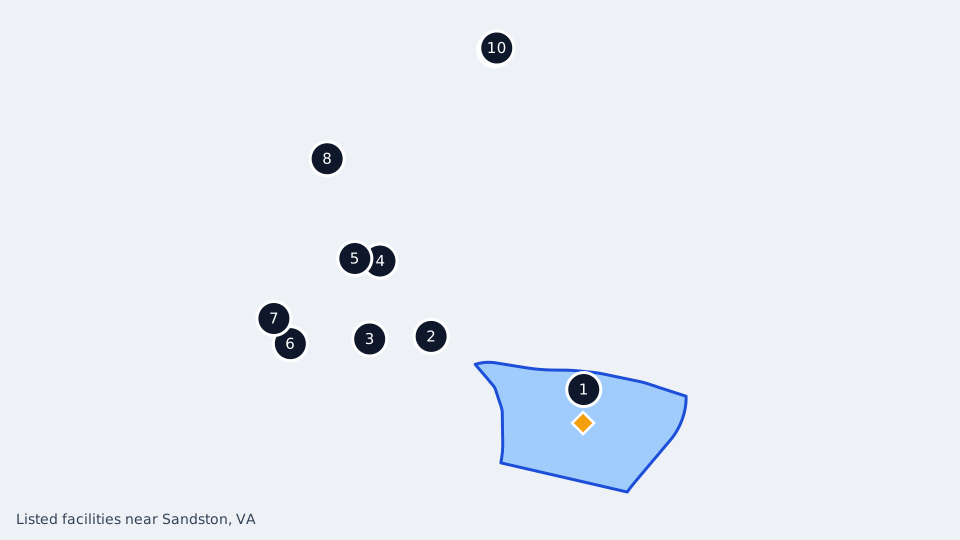
These lists use only what the 10 active facilities listed for Sandston report to SAMHSA's FindTreatment.gov. No facility pays to be included or can ask to be moved. Reporting more options is not a measure of quality, outcomes or suitability for any person. A missing option means the facility did not report it to the source, not that it is not offered. Call the facility to confirm everything before relying on it.
How this list is made: each facility scores one point for each of these 5 levels of care (settings) it reports to SAMHSA's FindTreatment.gov (Residential (24-hour); Outpatient; Intensive outpatient; Partial hospitalization / day treatment; Hospital inpatient). A facility needs at least 3 to appear. Facilities are shown from the highest count to the lowest; facilities with the same count are in alphabetical order, which has no other meaning. Up to 10 are shown.
How this list is made: each facility scores one point for each of these 7 payment and cost-assistance options it reports to SAMHSA's FindTreatment.gov (Medicaid; Medicare; Private health insurance; Military insurance (TRICARE); Cash or self-payment; Sliding fee scale; Payment assistance). A facility needs at least 4 to appear. Facilities are shown from the highest count to the lowest; facilities with the same count are in alphabetical order, which has no other meaning. Up to 10 are shown.
How this list is made: each facility scores one point for each of these 4 medications used in treatment it reports to SAMHSA's FindTreatment.gov (Buprenorphine; Methadone; Naltrexone; Medication for alcohol use disorder). A facility needs at least 2 to appear. Facilities are shown from the highest count to the lowest; facilities with the same count are in alphabetical order, which has no other meaning. Up to 10 are shown.
How this list is made: each facility scores one point for each of these 12 age groups and client groups accepted it reports to SAMHSA's FindTreatment.gov (Adolescents; Young adults; Adults; Seniors; Pregnant or postpartum women; Adult women; Adult men; Veterans; Active duty military; Criminal justice clients; Clients who have experienced trauma; Co-occurring mental and substance use disorders). A facility needs at least 5 to appear. Facilities are shown from the highest count to the lowest; facilities with the same count are in alphabetical order, which has no other meaning. Up to 10 are shown.
Programs range from outpatient counseling and medication-assisted treatment to intensive outpatient programs (IOP) and residential care. Each facility offers different services, so it helps to call and ask what specific options they provide.
Think about your daily responsibilities, how much support you need and whether you prefer a structured environment or more flexibility. Talking to an intake counselor can help you understand what level of care fits your situation.
Programs vary widely. Detox typically lasts 3 to 7 days. Residential treatment is often 30 to 90 days. Outpatient can range from 8 weeks to 6 months or more. The right length depends on your personal history and progress.
Most health insurance plans are required to cover substance use treatment under the Affordable Care Act. You should call your insurance company to ask about your specific plan's in-network providers, copays, and deductibles. Many centers also offer sliding-scale fees if you pay yourself.
It depends on the level of care. Residential programs require you to live there full time, so most people take leave from work. Outpatient programs can often be scheduled around your work hours, such as evening or weekend sessions. Check with your employer about the Family and Medical Leave Act (FMLA) if you need time off.
Last updated