 Sentinel Alcohol Detox

8840 Belair Road, Nottingham, MD, 21236
Active
- Outpatient
- Medicaid
- Medicare
- Private insurance
City
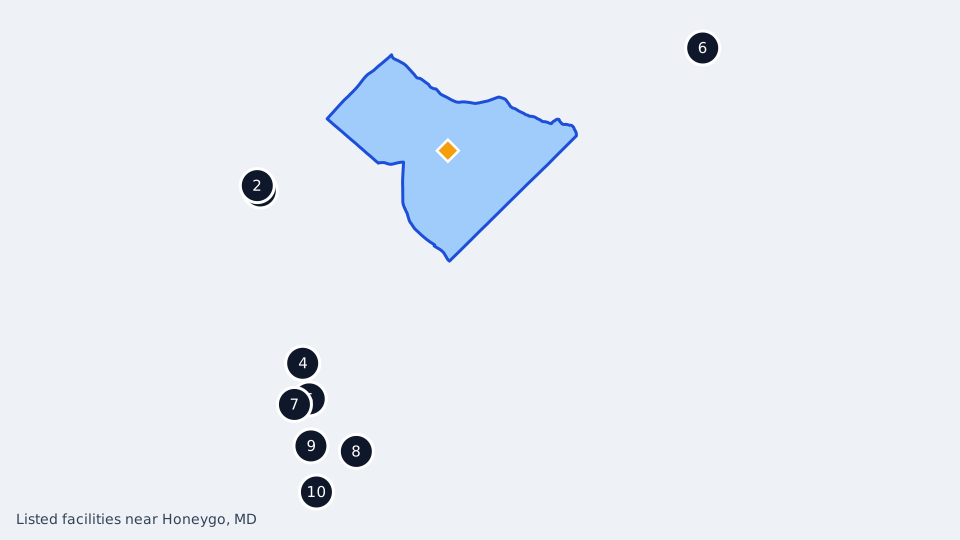
10 options near Honeygo, MD, nearest first. Compare services and locations, then call to check availability.
This number connects to our central helpline, not directly to a listed facility.
You will speak with a real person who understands what you are going through.
The call is free and confidential, with no obligation to move forward.
You will leave the call knowing exactly what happens next.
If you are looking for alcohol rehabilitation in or near Honeygo, you may be feeling ready to make a change but unsure what the first step looks like. That is completely normal. On your first day at a program, you will typically complete an intake assessment where a counselor asks about your drinking, health history, and personal goals.
This helps the team figure out the right level of care for you, whether that is outpatient counseling, a partial hospitalization program (PHP), or residential treatment. Many programs also use this time to check for any co-occurring conditions, such as anxiety or depression, so they can treat the whole picture. The most important thing is to show up and be honest about where you are, so you can get a plan that truly fits.
Call (877) 712-7713
Alcohol rehab comes in three basic levels, and knowing which one fits is half the decision. Detox is the short first stage, usually three to seven days, where medical staff watch you while the alcohol leaves your system and treat the dangerous parts of withdrawal with medication. Residential treatment means you live at the facility for a few weeks to a few months, with structured days of counseling, groups and meals, and no access to drinking.
Outpatient care means you sleep at home and attend treatment during the day or evening, which works best once the physical danger has passed and you need support while keeping up work or family life. If you have been drinking heavily every day, or you have shakes, sweating or anxiety when you stop, start with detox, because stopping cold turkey on your own can be dangerous. If drinking has wrecked your sleep, your health or your relationships but you are medically stable, outpatient can be a good starting point.
Many people do all three in sequence: detox first, then residential or outpatient, then ongoing outpatient follow-up.
Call (877) 712-7713Round-the-clock medical monitoring while your body clears alcohol safely.
You live on site for weeks, with therapy and structure every day.
Scheduled sessions while you keep living at home and working.
Ongoing support and check-ins that help sobriety last.
When you call a rehab program for the first time, the person answering expects questions, so ask plainly. Start with the money: what does the program cost, what insurance do you take, and is there a sliding scale if I am paying myself? Then ask about the medical side: do you have doctors and nurses on site, what medications do you use for withdrawal, and what happens if I have a seizure or another emergency during detox?
Ask about the schedule: how long is the program, what does a typical day look like, and how many hours of counseling per week? Ask about the rules: can I have visitors, can I use my phone, and what happens if I drink while in the program? Ask about aftercare: what happens when the program ends, do you offer outpatient follow-up, and is there a support group connection?
Finally, ask the gut-check question: if I arrive tonight, is there a bed, and if not, how long is the wait and what should I do in the meantime?
In Maryland, the cost of alcohol rehab is commonly covered through private insurance plans, including those obtained through employers or the Maryland Health Connection marketplace. Public health coverage such as Medicare and Medicaid, specifically Maryland’s Medical Assistance program, also plays a role, but eligibility must be verified directly with the provider. Many facilities offer sliding-scale fees based on income, and self-pay options are available for those without insurance.
Always confirm directly with the center what forms of payment and coverage they accept before admission.
Choosing between a few nearby programs comes down to specifics, not brochures. Check licensure and accreditation first: state-licensed facilities, and those accredited by national bodies, meet baseline standards, and you can usually verify this on the phone. Check the medical coverage: if you drink heavily or have had withdrawal symptoms before, pick a program with real medical detox, meaning doctors and nurses on site around the clock, not just periodic check-ins.
Check the match to your situation: if you work, ask about evening or weekend outpatient hours; if you have children, ask about family programs; if you also struggle with depression, anxiety or pain, ask whether they treat those at the same time, because drinking rarely travels alone. Check the money honestly: a program you can actually afford, or that your insurance truly covers, beats a fancier one that bankrupts you or that you leave early. And check the feel: when you call, do they answer your questions directly, or do they push and pressure?
Pressure and hard sells are red flags. A program confident in itself lets you think it over. Finally, distance matters less than fit.
Driving forty minutes to the right program is better than five minutes to the wrong one, but if you have no car, a close program you can actually attend daily is the better choice.
If you are looking for alcohol rehabilitation in or near Honeygo, you may be feeling ready to make a change but unsure what the first step looks like.

Severe alcohol withdrawal is a medical emergency, the same way a heart attack is. If you or someone near you has been drinking heavily and now has seizures, shaking that will not stop, hallucinations, seeing or hearing things that are not there, severe confusion about time or place, a racing pounding heart, fever, or heavy sweating and vomiting, do not wait for it to pass. Call 911 immediately, or get to the nearest emergency room.
Tell the paramedics and doctors plainly that this is alcohol withdrawal and how much and how often the person has been drinking; that detail changes the treatment they give, and no one there will judge you for it. Do not try to drive yourself if you are the one who is confused or seizing. If the person is aggressive or not making sense, stay calm, keep them from hurting themselves, and wait for help.
If withdrawal has been going on for hours and is getting worse rather than better, that is deterioration, and deterioration is an emergency even without a dramatic single symptom. Alcohol withdrawal can kill; the danger window is roughly the first one to three days after the last drink, and symptoms can spike without warning. Emergency rooms treat this every day.
Once the person is medically stable, the hospital can point you to detox or rehab as the next step, so the emergency visit is not a detour from getting help; it is often the fastest way in.
If you or someone else is in immediate danger, call 911 now.
Call (877) 712-77138840 Belair Road, Nottingham, MD, 21236
Active
4111 East Joppa Road, Suite 101, Nottingham, MD, 21236
Active
5235 King Avenue, Suite 200, Rosedale, MD, 21237
Active
5235 King Avenue, Suite 300, Rosedale, MD, 21237
Active
9201 Philadelphia Road, Rosedale, MD, 21237
Active
623 Pulaski Highway, Suite A, Joppa, MD, 21085
Active
9106 Philadelphia Road, Suite 106, Rosedale, MD, 21237
Active
109 Beacon Road, Middle River, MD, 21220
Active
8909 Kelso Drive, Essex, MD, 21221
Active
621 Stemmers Run Road, Suite B, Essex, MD, 21221
Active
Free and confidential. Call any time.
These lists use only what the 10 active facilities listed for Honeygo report to SAMHSA's FindTreatment.gov. No facility pays to be included or can ask to be moved. Reporting more options is not a measure of quality, outcomes or suitability for any person. A missing option means the facility did not report it to the source, not that it is not offered. Call the facility to confirm everything before relying on it.
How this list is made: each facility scores one point for each of these 5 levels of care (settings) it reports to SAMHSA's FindTreatment.gov (Residential (24-hour); Outpatient; Intensive outpatient; Partial hospitalization / day treatment; Hospital inpatient). A facility needs at least 3 to appear. Facilities are shown from the highest count to the lowest; facilities with the same count are in alphabetical order, which has no other meaning. Up to 10 are shown.
How this list is made: each facility scores one point for each of these 7 payment and cost-assistance options it reports to SAMHSA's FindTreatment.gov (Medicaid; Medicare; Private health insurance; Military insurance (TRICARE); Cash or self-payment; Sliding fee scale; Payment assistance). A facility needs at least 4 to appear. Facilities are shown from the highest count to the lowest; facilities with the same count are in alphabetical order, which has no other meaning. Up to 10 are shown.
How this list is made: each facility scores one point for each of these 4 medications used in treatment it reports to SAMHSA's FindTreatment.gov (Buprenorphine; Methadone; Naltrexone; Medication for alcohol use disorder). A facility needs at least 2 to appear. Facilities are shown from the highest count to the lowest; facilities with the same count are in alphabetical order, which has no other meaning. Up to 10 are shown.
How this list is made: each facility scores one point for each of these 12 age groups and client groups accepted it reports to SAMHSA's FindTreatment.gov (Adolescents; Young adults; Adults; Seniors; Pregnant or postpartum women; Adult women; Adult men; Veterans; Active duty military; Criminal justice clients; Clients who have experienced trauma; Co-occurring mental and substance use disorders). A facility needs at least 5 to appear. Facilities are shown from the highest count to the lowest; facilities with the same count are in alphabetical order, which has no other meaning. Up to 10 are shown.
It helps to ask what the first appointment looks like, whether they accept your insurance, and what types of alcohol rehab they offer. You can also ask about hours, location, and if they treat any other issues like anxiety or depression at the same time. Write down your questions so you don’t forget.
Many alcohol rehab programs accept self-referrals, meaning you do not need a doctor’s note to get started. However, some programs have specific requirements, so it is best to call ahead and ask about their intake process. If you have a primary care provider, they may be able to help guide you.
Detox usually runs three to seven days, depending on how much you drank and how your body responds. Residential programs typically last twenty-eight to ninety days. Outpatient programs often run six to twelve weeks, with fewer hours per week as you progress. There is no fixed timeline that fits everyone; a good program assesses you and adjusts. Many people continue some form of counseling or group support for months or years afterward, because staying sober is a practice, not a program length.
In most cases yes, but bring every medication, in original bottles, and tell the intake staff about all of them, including sleep aids or anything bought without a prescription. Some medications interact with alcohol or with the drugs used in detox, so the medical team may adjust doses or swap some out during your stay. Hiding medications, especially sedatives or painkillers, causes problems later. Be fully honest at intake; the staff are deciding your care based on what you tell them.
Relapse is common and it is not the end of the road; most treatment models treat it as information, not failure. If you relapse after heavy drinking, do not assume you have to start over from zero; call the program you finished and ask about re-entry or a refresher stay, which many offer to alumni. If you relapse and then stop again on your own, be alert for withdrawal symptoms, because your tolerance has changed and withdrawal can hit differently the second time. The useful question after a relapse is what happened in the days before it, and a counselor can help you find the pattern and patch it.
Last updated