 Sentinel Alcohol Detox

704 East 9 Mile Road, Hazel Park, MI, 48030
Active
- Outpatient
- Medication-assisted treatment
- Medicaid
- Medicare
City
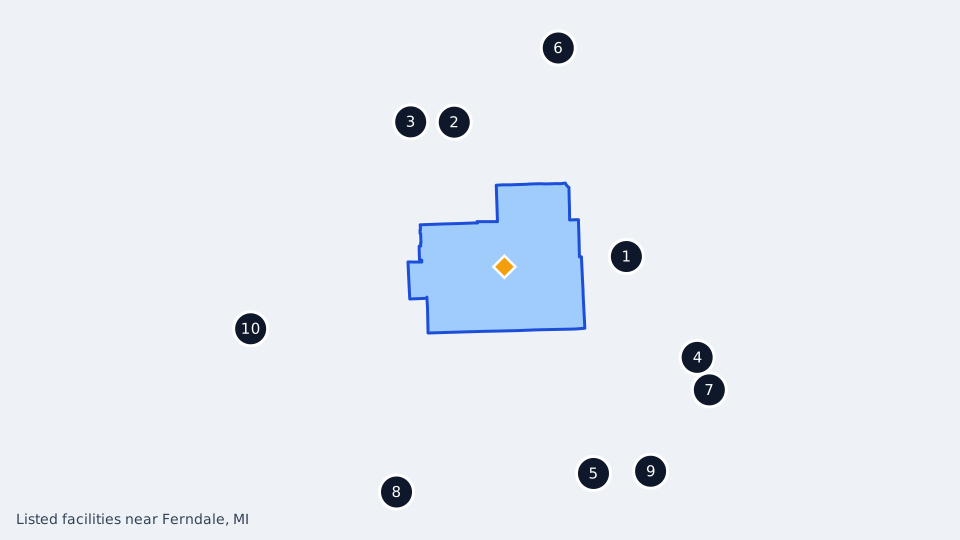
10 options near Ferndale, MI, nearest first. Compare services and locations, then call to check availability.
Call (877) 712-7713Free · ConfidentialThis number connects to our central helpline, not directly to a listed facility.
You will speak with a real person who understands what you are going through.
The call is free and confidential, with no obligation to move forward.
You will leave the call knowing exactly what happens next.
If you are in or near Ferndale and thinking about alcohol rehab, you are taking a step that many people in southeast Michigan have taken before. The first day usually starts with a conversation — a professional will talk with you about your drinking, your health, and what you hope to change. There is no single way that first day looks; some programs begin with an assessment over the phone, while others ask you to come in person.
What matters most is that you are met with respect and given a clear idea of what comes next.
Call (877) 712-7713
Detox is the medically supervised process of stopping alcohol use. It usually lasts a few days to a week and is focused on managing withdrawal symptoms. Residential (inpatient) care means you live at the facility 24/7 for a set period, typically 30 to 90 days.
Outpatient care allows you to live at home while attending therapy sessions, often a few hours per week. The choice depends on the severity of your drinking, your home environment, and whether you have medical or mental health conditions that need daily monitoring.
Call (877) 712-7713Round-the-clock medical monitoring while your body clears alcohol safely.
You live on site for weeks, with therapy and structure every day.
Scheduled sessions while you keep living at home and working.
Ongoing support and check-ins that help sobriety last.
On your first call, ask: 'What is your policy on using prescription medications like naltrexone or acamprosate to support recovery?' Also ask: 'Do you offer individual therapy sessions, and how often are they scheduled?' Finally, confirm: 'What does a typical daily schedule look like in your program?'
Paying for alcohol rehab centers in Michigan commonly starts with your private insurance, which may reimburse part of the cost if the facility is in-network, but you'll be responsible for any deductibles and coinsurance. If you qualify, public health coverage like Medicaid or Medicare can cover treatment, yet not every center accepts these plans, so call ahead to confirm. Many locations provide sliding-scale fees or discounts for those without insurance, and self-pay is straightforward, sometimes with flexible payment schedules.
To avoid surprises, request a clear breakdown of costs, including any hidden fees, and verify your insurance benefits before you commit to a program.
When deciding between nearby programs, look at three concrete factors. First, check the length of the program—some centers offer 30-day stays while others offer 60 or 90 days; longer stays often lead to better outcomes for heavy alcohol use. Second, ask about the staff-to-client ratio—smaller groups usually mean more individual attention.
Third, confirm if the program addresses any co-occurring conditions like depression or anxiety, because treating both together is more effective.
If you are in or near Ferndale and thinking about alcohol rehab, you are taking a step that many people in southeast Michigan have taken before.

Severe alcohol withdrawal is a medical emergency. If you are experiencing confusion, rapid heart rate, seizures, or hallucinations, call 911 or go to the nearest emergency room immediately. Do not try to stop drinking suddenly without medical supervision if you have been drinking heavily for a long time.
If you or someone else is in immediate danger, call 911 now.
Call (877) 712-7713704 East 9 Mile Road, Hazel Park, MI, 48030
Active
117 West 3rd Street, Royal Oak, MI, 48067
Active
26862 Woodward Avenue, Suite 103, Royal Oak, MI, 48067
Active
19940 Conant Street, Suites A, B and C, Detroit, MI, 48234
Active
300 West McNichols Street, Highland Park, MI, 48203
Active
1500 North Stephenson Highway, Suite 220, Royal Oak, MI, 48067
Active
19211 Anglin Street, Detroit, MI, 48234
Active
16647 Wyoming Avenue, Detroit, MI, 48221
Active
1121 East McNichols Road, Highland Park, MI, 48203
Active
20820 Greenfield Road, Suite 100, Oak Park, MI, 48237
Active
Free and confidential. Call any time.
These lists use only what the 10 active facilities listed for Ferndale report to SAMHSA's FindTreatment.gov. No facility pays to be included or can ask to be moved. Reporting more options is not a measure of quality, outcomes or suitability for any person. A missing option means the facility did not report it to the source, not that it is not offered. Call the facility to confirm everything before relying on it.
How this list is made: each facility scores one point for each of these 5 levels of care (settings) it reports to SAMHSA's FindTreatment.gov (Residential (24-hour); Outpatient; Intensive outpatient; Partial hospitalization / day treatment; Hospital inpatient). A facility needs at least 3 to appear. Facilities are shown from the highest count to the lowest; facilities with the same count are in alphabetical order, which has no other meaning. Up to 10 are shown.
How this list is made: each facility scores one point for each of these 7 payment and cost-assistance options it reports to SAMHSA's FindTreatment.gov (Medicaid; Medicare; Private health insurance; Military insurance (TRICARE); Cash or self-payment; Sliding fee scale; Payment assistance). A facility needs at least 4 to appear. Facilities are shown from the highest count to the lowest; facilities with the same count are in alphabetical order, which has no other meaning. Up to 10 are shown.
How this list is made: each facility scores one point for each of these 4 medications used in treatment it reports to SAMHSA's FindTreatment.gov (Buprenorphine; Methadone; Naltrexone; Medication for alcohol use disorder). A facility needs at least 2 to appear. Facilities are shown from the highest count to the lowest; facilities with the same count are in alphabetical order, which has no other meaning. Up to 10 are shown.
How this list is made: each facility scores one point for each of these 12 age groups and client groups accepted it reports to SAMHSA's FindTreatment.gov (Adolescents; Young adults; Adults; Seniors; Pregnant or postpartum women; Adult women; Adult men; Veterans; Active duty military; Criminal justice clients; Clients who have experienced trauma; Co-occurring mental and substance use disorders). A facility needs at least 5 to appear. Facilities are shown from the highest count to the lowest; facilities with the same count are in alphabetical order, which has no other meaning. Up to 10 are shown.
The right level of care depends on your situation. Some programs offer outpatient sessions a few times a week, while others provide more structured daily support. A counselor or intake specialist can help you understand what fits your needs based on your drinking patterns, health, and daily responsibilities.
Many programs have staff who can discuss payment options, sliding-scale fees, or public funding. It is best to contact the program directly to ask about financial help and what documents you may need.
Program lengths vary. Detox can take 5 to 7 days. Residential treatment often lasts 30, 60, or 90 days. Outpatient programs can run for several months, with sessions tapering off over time.
Yes, some programs are designed for this. Outpatient care allows you to attend therapy during the day or evening and return home. Residential programs require you to live at the facility, so you would need to arrange time away.
Some programs offer sliding-scale fees based on income. There are also state-funded or nonprofit rehab centers that provide low-cost or free care. You can search for these resources through your local health department.
Last updated