 Sentinel Alcohol Detox

19 Prospect Street, Summit, NJ, 07901
Active
- Hospital inpatient
- Detox
- Medication-assisted treatment
- Medicaid
City
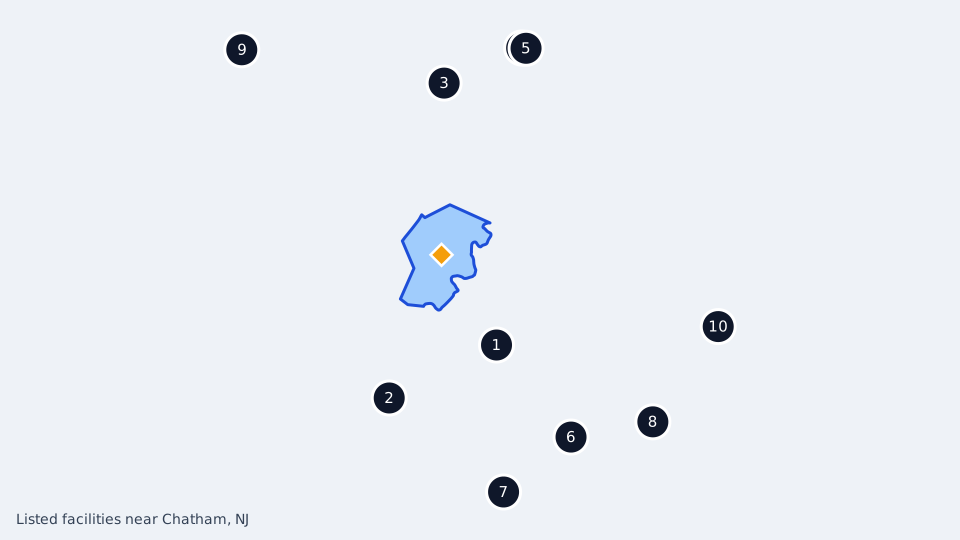
10 options near Chatham, NJ, nearest first. Compare services and locations, then call to check availability.
This number connects to our central helpline, not directly to a listed facility.
You will speak with a real person who understands what you are going through.
The call is free and confidential, with no obligation to move forward.
You will leave the call knowing exactly what happens next.
If you are reading this in or near Chatham right now, you or someone you love is probably in one of two situations. Either you are worried about drinking that has gotten out of hand, or you have already tried to stop and felt too sick to keep going. Either way, you are doing the right thing by looking for help now rather than waiting.
One safety point comes first. If there are seizures, hallucinations, confusion, or a racing heart right now, do not try to drive to a treatment center. Call 911 or go to the nearest emergency room.
Severe alcohol withdrawal can turn dangerous fast, and it needs medical care immediately. For most people, though, the first step is not an emergency room. It is a phone call.
When you reach out to a treatment program, someone will ask a few basic questions. How much do you drink, how often, and when was your last drink. What medications do you take.
Have you tried to quit before, and what happened when you did. These questions are not judgments. They help the staff figure out whether you need medical detox, where nurses and doctors can keep you safe while the alcohol leaves your system, or whether you can start with counseling and outpatient visits.
On a first day at a program, expect paperwork, a health screening, and an honest conversation about your drinking. You will likely meet a counselor or clinician who will work with you on a plan. Some people go home the same day.
Others stay, depending on what the screening shows and what level of care fits. Family members can make the first call too. You do not need the person who is struggling to agree before you start asking questions.
Programs near Chatham and across this part of New Jersey take calls from spouses, parents, and adult children every day. Ask about hours, insurance, and what to bring. If one program cannot take you, ask them who else to call.
Every city in this area is within a short drive of several options, so do not give up after one call. You do not have to have everything figured out before you call. You only have to reach out and answer honestly.
The people on the other end of the line handle these calls all the time, and nothing you say will shock them.
Call (877) 712-7713
The difference between these levels of care is really about how much structure and medical supervision you need. Detox handles the physical crisis. When a heavy drinker stops suddenly, the body can react badly, with shaking, sweating, a racing heart and, in the worst cases, seizures.
A detox program treats those symptoms with medication and monitoring until you are through the danger zone, usually within a week. Residential care takes over after that, or sometimes instead of it when withdrawal risk is low but life at home is a mess. You live there, follow a daily schedule of counseling and groups, and stay long enough for new habits to take hold.
Outpatient is the least restrictive option. You attend therapy sessions on a schedule while living at home. A good rule of thumb: the more severe and long-standing the drinking, and the less stable your home situation, the higher the level of care you should choose.
Admissions staff can help you sort this out on the phone if you describe your drinking honestly.
Call (877) 712-7713Round-the-clock medical monitoring while your body clears alcohol safely.
You live on site for weeks, with therapy and structure every day.
Scheduled sessions while you keep living at home and working.
Ongoing support and check-ins that help sobriety last.
When you call a rehab center for the first time, treat it as a screening conversation in both directions. Ask whether they assess withdrawal risk before admission, and what they do if detox is needed. Ask about the staff: who runs the counseling, what licenses they hold, and how many patients each counselor carries.
Ask about the rules on visits, phone calls and leaving the grounds. Ask how they involve family, if you want your spouse or parents involved. Ask about money specifically: what insurance covers, what a stay costs without it, and whether payment plans exist.
Finally, ask what support they offer after discharge, because a program that ends the day you walk out the door has done only half the job.
When considering alcohol rehab in New Jersey, understanding payment options in advance helps avoid unexpected financial strain. The most common way people pay is through private insurance, whether obtained through an employer, a spouse's plan, or the state's health insurance marketplace; most of these plans include coverage for alcohol treatment services at some level. New Jersey residents who are uninsured or underinsured may qualify for NJ FamilyCare, the state's public health insurance program, which can cover addiction treatment for eligible individuals.
Beyond insurance, many facilities offer sliding-scale fees that reduce the cost of treatment based on income and family size, and self-pay arrangements allow individuals or families to cover expenses directly without involving an insurer at all.
Choosing between rehab centers comes down to five things you can verify. One is the level of care on offer: detox, residential and outpatient cover different needs, and the right match depends on how severe the drinking is and how safe your home environment is. Two is staffing: ask who will actually treat you, what their qualifications are, and whether medical care is available on site.
Three is cost: confirm insurance acceptance in writing and get a dollar figure for what you would owe. Four is schedule and location: a program you cannot attend reliably will not work, no matter how good it is. Five is what happens after: relapse is common in the first year, and programs that plan for it with follow-up care and support groups do better by their patients.
Use these five as a checklist and the choice usually becomes clear.
If you are reading this in or near Chatham right now, you or someone you love is probably in one of two situations.

Some withdrawal symptoms are uncomfortable, and some are emergencies. Seizures, hallucinations, heavy confusion and a racing heart belong to the second group. They can appear within a day or two of the last drink, and they can be fatal.
If you see them in yourself or in someone else, call 911 or go straight to the nearest emergency room. Tell the medical staff exactly how much was being drunk and when it stopped, because that information shapes the treatment. Nobody at the hospital will judge the drinking; their job is to keep the person alive and stable.
If you or someone else is in immediate danger, call 911 now.
Call (877) 712-771319 Prospect Street, Summit, NJ, 07901
Active
571 Central Avenue, Suite 108, New Providence, NJ, 07974
Active
25A Hanover Road, Suite 120, Florham Park, NJ, 07932
Active
5 Regent Street, Suite 518, Livingston, NJ, 07039
Active
7 Regent Street, Suite 701, Livingston, NJ, 07039
Active
841 Mountain Avenue, Suite 100, Springfield, NJ, 07081
Active
1450 Us-22, Mountainside, NJ, 07092
Active
43 Progress Street, Union, NJ, 07083
Active
25 Lindsley Drive, Suite 300, Morristown, NJ, 07960
Active
2041 Springfield Avenue, Vauxhall, NJ, 07088
Active
Free and confidential. Call any time.
These lists use only what the 10 active facilities listed for Chatham report to SAMHSA's FindTreatment.gov. No facility pays to be included or can ask to be moved. Reporting more options is not a measure of quality, outcomes or suitability for any person. A missing option means the facility did not report it to the source, not that it is not offered. Call the facility to confirm everything before relying on it.
How this list is made: each facility scores one point for each of these 5 levels of care (settings) it reports to SAMHSA's FindTreatment.gov (Residential (24-hour); Outpatient; Intensive outpatient; Partial hospitalization / day treatment; Hospital inpatient). A facility needs at least 3 to appear. Facilities are shown from the highest count to the lowest; facilities with the same count are in alphabetical order, which has no other meaning. Up to 10 are shown.
How this list is made: each facility scores one point for each of these 7 payment and cost-assistance options it reports to SAMHSA's FindTreatment.gov (Medicaid; Medicare; Private health insurance; Military insurance (TRICARE); Cash or self-payment; Sliding fee scale; Payment assistance). A facility needs at least 4 to appear. Facilities are shown from the highest count to the lowest; facilities with the same count are in alphabetical order, which has no other meaning. Up to 10 are shown.
How this list is made: each facility scores one point for each of these 4 medications used in treatment it reports to SAMHSA's FindTreatment.gov (Buprenorphine; Methadone; Naltrexone; Medication for alcohol use disorder). A facility needs at least 2 to appear. Facilities are shown from the highest count to the lowest; facilities with the same count are in alphabetical order, which has no other meaning. Up to 10 are shown.
How this list is made: each facility scores one point for each of these 12 age groups and client groups accepted it reports to SAMHSA's FindTreatment.gov (Adolescents; Young adults; Adults; Seniors; Pregnant or postpartum women; Adult women; Adult men; Veterans; Active duty military; Criminal justice clients; Clients who have experienced trauma; Co-occurring mental and substance use disorders). A facility needs at least 5 to appear. Facilities are shown from the highest count to the lowest; facilities with the same count are in alphabetical order, which has no other meaning. Up to 10 are shown.
Do not try to quit cold turkey on your own if you have been drinking heavily every day. Alcohol withdrawal can cause seizures, hallucinations, confusion, and a racing heart, and it can turn dangerous fast. If any of those symptoms are happening right now, call 911 or go to the nearest emergency room. Otherwise, call a treatment program first and let them screen you. They will tell you whether you need medical detox or whether you can safely start with counseling and outpatient visits.
Yes. Treatment programs take calls from spouses, parents, and adult children every day, and you do not need the person who is struggling to agree before you start asking questions. Call, explain the situation, and ask what options exist. Ask about hours, insurance, and what to bring. If one program cannot help, ask them who else to call, and do not give up after one call.
Yes, if it is safe. Outpatient works best when withdrawal risk is low and the home environment supports staying sober. If drinking has been heavy and daily, or there has ever been a seizure while quitting, medical detox or residential care is the safer starting point.
Many programs include family sessions, because people close to the drinker are often hurt by it and can help with recovery. Visiting rules vary by program, and residential centers usually have set visiting hours. Ask about family involvement on the first call.
In almost all cases treatment is voluntary, and it works best that way. A few states allow courts to mandate treatment after certain offenses, and some allow family-initiated commitment in narrow circumstances. But for most adults, the door to rehab opens from the inside, when the person is ready to walk through it.
Last updated