 Sentinel Alcohol Detox

FMRS Health Systems Inc — 101 South Eisenhower Drive
0.7 mi, Beckley101 South Eisenhower Drive, Beckley, WV, 25801
Active
- Residential
- Detox
- Medication-assisted treatment
- Medicaid
City
9 options near Beckley, WV, nearest first. Compare services and locations, then call to check availability.
This number connects to our central helpline, not directly to a listed facility.
If you are looking for alcohol rehab in or near Beckley, the first step is finding a program that fits your needs. An intake appointment typically involves a conversation about your drinking, your health, and any other concerns. The program will then recommend a level of care, which may include outpatient counseling, medication, or a structured day program.
Call each center directly to ask about admission requirements, what to bring, and how soon you can start.
Medical detox is a supervised program where doctors and nurses monitor your body while alcohol leaves your system. It manages withdrawal symptoms and keeps you safe. Detox alone is not treatment — it prepares you for the next step.
Residential rehab means you live at the facility 24/7 for several weeks. It provides structure, group and individual therapy, and peer support. Outpatient care lets you attend sessions during the day and return home at night.
It works for people who have stable housing and a supportive environment. You might start with detox or residential, then step down to outpatient. Or you may begin directly with outpatient if your drinking pattern is moderate.
A professional assessment can help you see which level fits your situation.
On the first call, ask if they offer a medical assessment before admission. Find out what type of therapy they use (individual counseling, group sessions, family involvement). Ask how long the program lasts and what a typical day looks like.
Clarify if they have a doctor or nurse on-site and how they handle withdrawal symptoms. Ask about aftercare planning — what support do they offer once you leave? Also, ask what insurance plans they accept and if they offer a sliding-scale fee.
Write down the answers so you can compare programs side by side.
In West Virginia, alcohol rehab centers typically accept private insurance, though it is important to check with both the insurer and the facility about network participation. Public programs such as Medicaid and Medicare can provide coverage for eligible individuals, subject to confirmation of eligibility. For those without insurance, sliding-scale fees and self-pay plans are common, but each center determines its own terms, so direct inquiry is advised.
Reach our free, confidential helpline any time, day or night.
A short conversation helps match you with the right level of care.
If needed, withdrawal is managed safely under medical supervision.
You leave with a clear plan for ongoing treatment and support.
Look at location: how far are you willing to travel? Consider cost and whether they accept your insurance or offer payment help. Check if they provide the right level of care — detox, residential, or outpatient.
Think about the program length: short-term (30 days) or long-term (60–90 days). Ask what therapies they use. Evidence-based options like cognitive behavioral therapy (CBT), motivational interviewing, or 12-step facilitation are common.
Also consider whether they offer dual diagnosis treatment if you also have a mental health condition, such as anxiety or depression. Finally, ask to speak with a current or former client if possible. Real feedback is valuable.
If you are looking for alcohol rehab in or near Beckley, the first step is finding a program that fits your needs.

Severe alcohol withdrawal can be life-threatening. Symptoms like confusion, rapid heart rate, seizures, or hallucinations (seeing or hearing things that aren't there) mean you need emergency medical help immediately. If you or someone near you shows these signs, call 911 or go to the nearest emergency room right now.
Do not try to manage severe withdrawal alone at home. For immediate danger of harm to self or others, call 988 for the Suicide and Crisis Lifeline. Your safety is the first priority.
If you or someone else is in immediate danger, call 911 now.
101 South Eisenhower Drive, Beckley, WV, 25801
Active
200 Veterans Avenue, Beckley, WV, 25801
Active
3581 Robert C Byrd Drive, Beckley, WV, 25801
Active
130 George Street, Suites E and F, Beckley, WV, 25801
Active
110 James Street, Hinton, WV, 25951
Active
201 Madison Street, Hinton, WV, 25951
Active
102 Howard Avenue, Mullens, WV, 25882
Active
209 West Maple Avenue, Fayetteville, WV, 25840
Active
4725 Appalachian Highway, Rock View, WV, 24880
Active
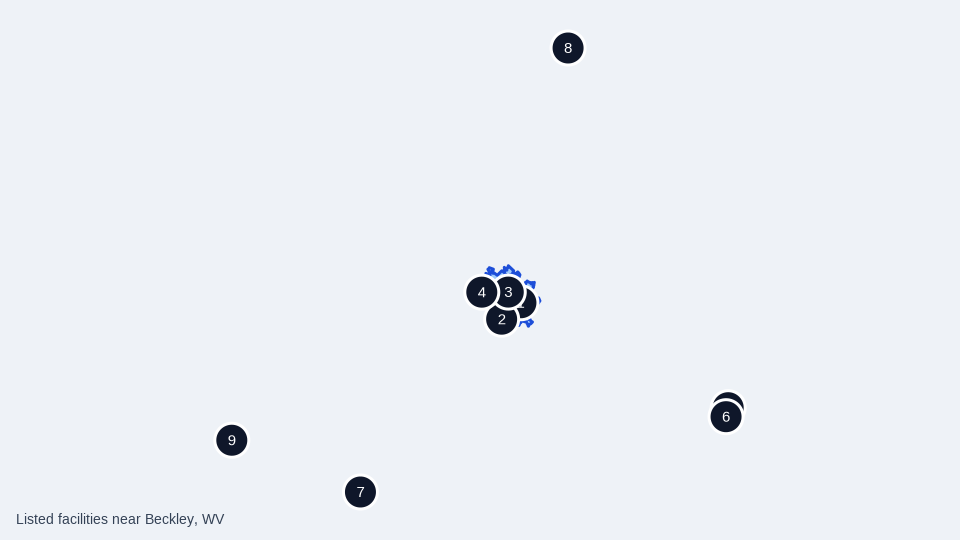
These lists use only what the 9 active facilities listed for Beckley report to SAMHSA's FindTreatment.gov. No facility pays to be included or can ask to be moved. Reporting more options is not a measure of quality, outcomes or suitability for any person. A missing option means the facility did not report it to the source, not that it is not offered. Call the facility to confirm everything before relying on it.
How this list is made: each facility scores one point for each of these 5 levels of care (settings) it reports to SAMHSA's FindTreatment.gov (Residential (24-hour); Outpatient; Intensive outpatient; Partial hospitalization / day treatment; Hospital inpatient). A facility needs at least 3 to appear. Facilities are shown from the highest count to the lowest; facilities with the same count are in alphabetical order, which has no other meaning. Up to 10 are shown.
How this list is made: each facility scores one point for each of these 7 payment and cost-assistance options it reports to SAMHSA's FindTreatment.gov (Medicaid; Medicare; Private health insurance; Military insurance (TRICARE); Cash or self-payment; Sliding fee scale; Payment assistance). A facility needs at least 4 to appear. Facilities are shown from the highest count to the lowest; facilities with the same count are in alphabetical order, which has no other meaning. Up to 10 are shown.
How this list is made: each facility scores one point for each of these 4 medications used in treatment it reports to SAMHSA's FindTreatment.gov (Buprenorphine; Methadone; Naltrexone; Medication for alcohol use disorder). A facility needs at least 2 to appear. Facilities are shown from the highest count to the lowest; facilities with the same count are in alphabetical order, which has no other meaning. Up to 10 are shown.
How this list is made: each facility scores one point for each of these 12 age groups and client groups accepted it reports to SAMHSA's FindTreatment.gov (Adolescents; Young adults; Adults; Seniors; Pregnant or postpartum women; Adult women; Adult men; Veterans; Active duty military; Criminal justice clients; Clients who have experienced trauma; Co-occurring mental and substance use disorders). A facility needs at least 5 to appear. Facilities are shown from the highest count to the lowest; facilities with the same count are in alphabetical order, which has no other meaning. Up to 10 are shown.
Programs may include outpatient counseling, intensive outpatient programs, and medication-assisted treatment. Call each center to learn what specific services it offers and which level of care may be right for you.
Consider factors such as the type of treatment (outpatient or residential), whether the program offers medical care or counseling, and practical details like location, hours, and cost. Contact the programs directly to ask about their approach and admission requirements.
If you drink heavily every day or have tried to stop and felt shaking, sweating, or nausea, you may need medical detox first. Outpatient care works for people who drink less often and have a stable home environment. A doctor or an addiction specialist can help you decide by doing a simple assessment of your drinking history and withdrawal risks.
Yes, many outpatient programs are designed for people who work or have other daily responsibilities. Sessions usually happen in the evenings or on weekends. However, you need to be honest with yourself about whether you have a supportive place to return to after each session. If you find it hard to avoid drinking at home, residential care might be a better fit.
Most programs offer aftercare planning, which can include regular check-ins, outpatient groups, or referrals to community support like Alcoholics Anonymous. Some people also continue with individual therapy. The goal is to help you build a sober routine and prevent relapse. Ask the program about their aftercare options before you start, so you know what to expect.
Last updated