 Sentinel Alcohol Detox

Bloom Health Centers
0.4 mi, Arlington801 North Quincy Street, Unit 601, Arlington, VA, 22203
Active
- Day treatment
- Medicaid
- Medicare
- Private insurance
City
10 options near Arlington, VA, nearest first. Compare services and locations, then call to check availability.
This number connects to our central helpline, not directly to a listed facility.
If you are in or near Arlington, Virginia and are looking for a program to help you stop drinking or cut back, the first step is usually an assessment. Most alcohol rehab centers start with an intake appointment where a counselor or clinician learns about your drinking pattern, your health and your goals. From there the program may recommend outpatient treatment that lets you live at home while attending therapy sessions, or a more structured day program.
Some facilities offer evening groups so you can keep working or caring for family. Ask what happens during an intake appointment and which services are available.

Alcohol rehab offers three main levels. Medical detox is supervised withdrawal, often with medication to prevent dangerous symptoms. Residential care provides a structured, live-in environment with group and individual counseling.
Outpatient programs offer flexibility, allowing you to keep working or caring for family while getting treatment. Think about your home situation. If staying sober in your current environment seems impossible, residential can give you a break.
If you have a safe home and strong support, outpatient may work.
Do you have a doctor or nurse on staff during all hours, including weekends and overnight?
Payment for alcohol treatment in Virginia commonly involves private insurance policies that include coverage for medically supervised withdrawal, ongoing counseling, and relapse prevention services, with in-network facilities typically reducing out-of-pocket costs. For those who qualify, Medicaid or Medicare can provide comprehensive benefits for substance use disorder care, but eligibility and specific plan details must be verified directly with the program. Sliding-scale payment plans are frequently available to accommodate financial constraints, and self-pay arrangements allow direct payment for services at negotiated rates.
Location matters, but not always for the same reason. Some people need to be far from their drinking triggers. Others need to stay close to family or work.
Check if the program is licensed by the state. Confirm it follows evidence-based practices like cognitive behavioral therapy or motivational interviewing. Talk to the admissions person.
Note how they answer your questions. If they are rushed or vague, that may reflect the program culture. Visit if possible and ask to see a typical therapy room or common area.
If you are in or near Arlington, Virginia and are looking for a program to help you stop drinking or cut back, the first step is usually an assessment.

If you or someone with you has stopped drinking and now has shaking, confusion, fever or a fast pulse, call 911 right now. These are signs of delirium tremens, a medical emergency. Do not drive yourself if you are confused.
Tell the operator you need help for alcohol withdrawal. The ER can stabilize you and connect you to detox or rehab after. There is no shame in this; it is a serious medical condition that needs immediate care.
If you or someone else is in immediate danger, call 911 now.
801 North Quincy Street, Unit 601, Arlington, VA, 22203
Active
521 North Quincy Street, Arlington, VA, 22203
Active
521 North Quincy Street, Arlington, VA, 22203
Active
46 South Glebe Road, 3rd Floor, Arlington, VA, 22204
Active
1005 North Glebe Road, Suite 300, Arlington, VA, 22201
Active
2100 Washington Boulevard, Arlington, VA, 22204
Active
1723 Fairfax Drive, Arlington, VA, 22209
Active
1701 North George Mason Drive, Arlington, VA, 22205
Active
1701 Clarendon Boulevard, Suite 115, Arlington, VA, 22209
Active
1715 North George Mason Drive, Suite 201, Arlington, VA, 22205
Active
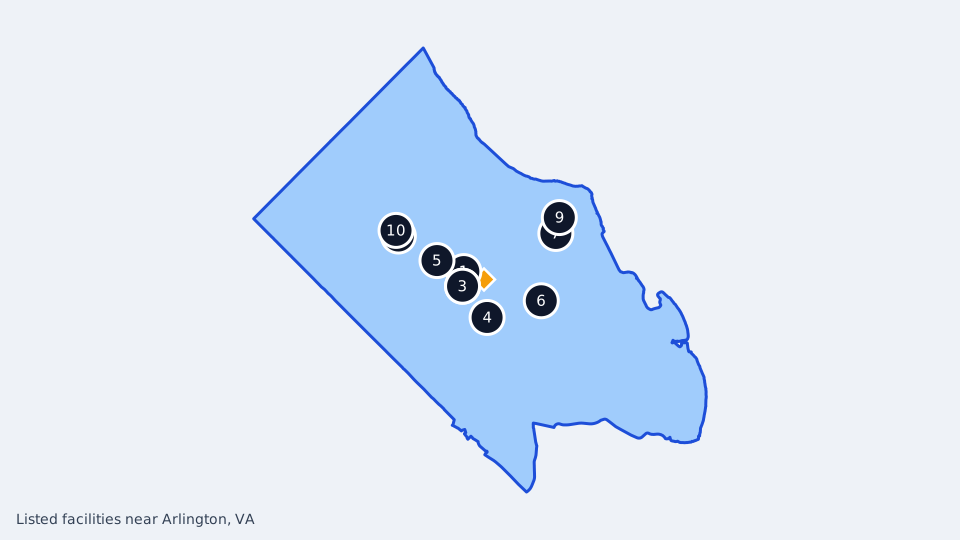
These lists use only what the 10 active facilities listed for Arlington report to SAMHSA's FindTreatment.gov. No facility pays to be included or can ask to be moved. Reporting more options is not a measure of quality, outcomes or suitability for any person. A missing option means the facility did not report it to the source, not that it is not offered. Call the facility to confirm everything before relying on it.
How this list is made: each facility scores one point for each of these 5 levels of care (settings) it reports to SAMHSA's FindTreatment.gov (Residential (24-hour); Outpatient; Intensive outpatient; Partial hospitalization / day treatment; Hospital inpatient). A facility needs at least 3 to appear. Facilities are shown from the highest count to the lowest; facilities with the same count are in alphabetical order, which has no other meaning. Up to 10 are shown.
How this list is made: each facility scores one point for each of these 7 payment and cost-assistance options it reports to SAMHSA's FindTreatment.gov (Medicaid; Medicare; Private health insurance; Military insurance (TRICARE); Cash or self-payment; Sliding fee scale; Payment assistance). A facility needs at least 4 to appear. Facilities are shown from the highest count to the lowest; facilities with the same count are in alphabetical order, which has no other meaning. Up to 10 are shown.
How this list is made: each facility scores one point for each of these 4 medications used in treatment it reports to SAMHSA's FindTreatment.gov (Buprenorphine; Methadone; Naltrexone; Medication for alcohol use disorder). A facility needs at least 2 to appear. Facilities are shown from the highest count to the lowest; facilities with the same count are in alphabetical order, which has no other meaning. Up to 10 are shown.
How this list is made: each facility scores one point for each of these 12 age groups and client groups accepted it reports to SAMHSA's FindTreatment.gov (Adolescents; Young adults; Adults; Seniors; Pregnant or postpartum women; Adult women; Adult men; Veterans; Active duty military; Criminal justice clients; Clients who have experienced trauma; Co-occurring mental and substance use disorders). A facility needs at least 5 to appear. Facilities are shown from the highest count to the lowest; facilities with the same count are in alphabetical order, which has no other meaning. Up to 10 are shown.
The right level depends on how much you drink, whether you have tried to stop before, and what your daily life looks like. Many Arlington centers offer outpatient care, which means you attend therapy sessions during the day or evening and go home afterward. If you need more structure, ask a program if they provide partial hospitalization or intensive outpatient services. A counselor can help you decide during an assessment.
You will find several alcohol rehab options listed in Arlington. Call each one to ask about services, intake appointments and whether they can meet your schedule. If you do not find what you need within the city, nearby areas in Virginia may have additional programs.
Most programs start with a set schedule to create structure. Days often include group therapy, individual counseling, education sessions and free time for exercise or reflection. Meals and sleep are on a routine. In detox, you may rest and be monitored. Afternoon and evening activities vary by program.
Most programs expect you to stop drinking during treatment. In detox, medical staff help you withdraw safely. In residential and outpatient, you are asked to remain alcohol-free. Some programs use medications to support abstinence. If you are unsure you can stop, talk to the admissions team before starting.
Yes, but the program's medical staff typically need to review and approve all medications. Bring your bottles with prescription labels. The facility will store and dispense them according to their safety rules. Never hide medications. That can be a safety issue and a reason for discharge.
Last updated