 Sentinel Alcohol Detox

Mayflower Recovery Center
0.4 mi, Wilmington362 Middlesex Avenue, Wilmington, MA, 01887
Active
- Hospital inpatient
- Detox
- Medication-assisted treatment
- Private insurance
City
10 options near Wilmington, MA, nearest first. Compare services and locations, then call to check availability.
This number connects to our central helpline, not directly to a listed facility.
If you are looking for alcohol detox in or near Wilmington, you may be wondering what the first step involves. A typical program starts with an intake assessment to review your health history and the severity of your alcohol use. Medical staff can monitor withdrawal symptoms and provide medication to keep you safe and comfortable.
Programs often include individual counseling and group support. Call a program directly to ask about its detox services, admission requirements and whether it offers medical supervision around the clock.

Think of detox as the medical safety net for quitting alcohol. You stay in a supervised setting where nurses can give medication for withdrawal symptoms. Residential treatment is the next level: you live at the facility for weeks, focusing on counseling and building sober habits.
Outpatient care is less intense; you attend sessions during the day and return home at night. The choice depends on your health. If you have a history of seizures or DT's, you need detox.
If you have a stable home and mild drinking, outpatient may be enough. For most, residential after detox gives the best start.
First call: ask how quickly you can be admitted. Many detox programs have a wait, and you need to know. Ask if they use a standardized assessment like the CIWA protocol for withdrawal.
Ask about their success rate for completing detox without relapse. Ask if you can have visitors or phone calls. Ask if they provide aftercare planning or just send you home.
Ask if they accept your insurance and what the out-of-pocket cost will be. Ask if the program is in a hospital or a separate facility.
Paying for alcohol detox in Massachusetts typically involves private health insurance, public coverage, or self-pay. Many private plans cover detox services; verifying benefits directly with your insurer is essential. Public options like MassHealth (Medicaid) may provide coverage for eligible residents, though confirming eligibility before admission is important.
Some facilities offer sliding-scale fees based on income, and self-pay is accepted at many centers. Always contact the specific facility to discuss payment arrangements and confirm what is accepted.
Reach our free, confidential helpline any time, day or night.
A short conversation helps match you with the right level of care.
If needed, withdrawal is managed safely under medical supervision.
You leave with a clear plan for ongoing treatment and support.
Criteria to weigh: the level of medical supervision. If you have had seizures before, you need a medically supervised detox, not just a social detox. Look at the program's discharge planning.
A good one will have a referral list for residential or step-down care. Compare costs: some are free through state funding, others are private pay. Ask about the treatment philosophy.
Some programs use a 12-step model, others use cognitive behavioral therapy. Choose the one that feels right to you. Visit the facility if possible, or at least talk to a current patient or alumni.
If you are looking for alcohol detox in or near Wilmington, you may be wondering what the first step involves.

Severe withdrawal from alcohol can cause seizures, heart failure, or brain damage. If you have a high heart rate, fever, or feel confused and disoriented, get emergency help. Go to the nearest emergency room or call 911.
Do not drive yourself if you feel unsafe. Tell the paramedics you are withdrawing from alcohol. They can help stabilize you.
If you or someone else is in immediate danger, call 911 now.
362 Middlesex Avenue, Wilmington, MA, 01887
Active
365 East Street, Saunders Building, Tewksbury, MA, 01876
Active
365 East Street, Saunders Building, Suite D-1, Tewksbury, MA, 01876
Active
20 Tower Office Park, Woburn, MA, 01801
Active
320 Essex Street, Lawrence, MA, 01840
Active
2 Courthouse Lane, Unit 2, Chelmsford, MA, 01824
Active
6 Essex Center Drive, Suite 303, Peabody, MA, 01960
Active
75 Lindall Street, Danvers, MA, 01923
Active
115 Mill Street, Mail Stop 222, Belmont, MA, 02478
Active
83 Baldpate Road, Georgetown, MA, 01833
Active
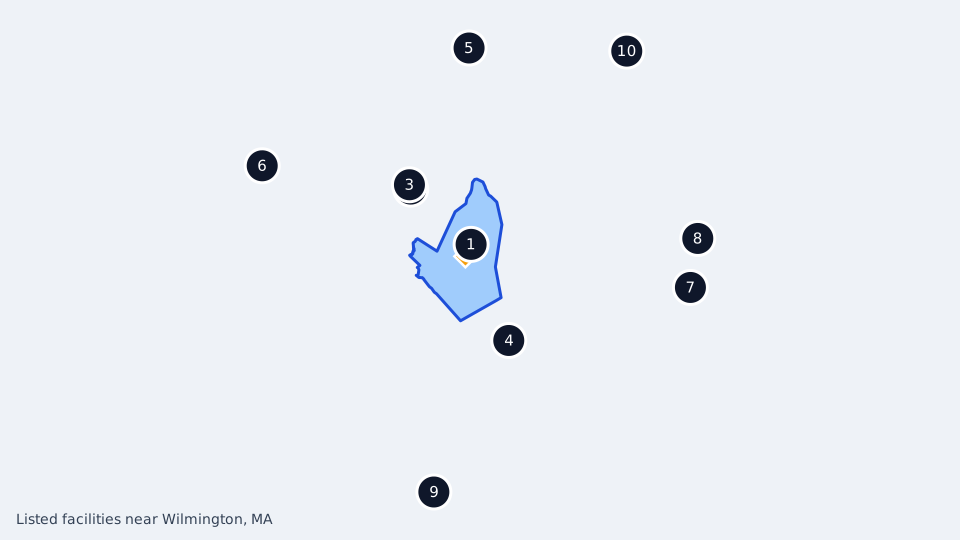
These lists use only what the 10 active facilities listed for Wilmington report to SAMHSA's FindTreatment.gov. No facility pays to be included or can ask to be moved. Reporting more options is not a measure of quality, outcomes or suitability for any person. A missing option means the facility did not report it to the source, not that it is not offered. Call the facility to confirm everything before relying on it.
How this list is made: each facility scores one point for each of these 5 levels of care (settings) it reports to SAMHSA's FindTreatment.gov (Residential (24-hour); Outpatient; Intensive outpatient; Partial hospitalization / day treatment; Hospital inpatient). A facility needs at least 3 to appear. Facilities are shown from the highest count to the lowest; facilities with the same count are in alphabetical order, which has no other meaning. Up to 10 are shown.
How this list is made: each facility scores one point for each of these 7 payment and cost-assistance options it reports to SAMHSA's FindTreatment.gov (Medicaid; Medicare; Private health insurance; Military insurance (TRICARE); Cash or self-payment; Sliding fee scale; Payment assistance). A facility needs at least 4 to appear. Facilities are shown from the highest count to the lowest; facilities with the same count are in alphabetical order, which has no other meaning. Up to 10 are shown.
How this list is made: each facility scores one point for each of these 4 medications used in treatment it reports to SAMHSA's FindTreatment.gov (Buprenorphine; Methadone; Naltrexone; Medication for alcohol use disorder). A facility needs at least 2 to appear. Facilities are shown from the highest count to the lowest; facilities with the same count are in alphabetical order, which has no other meaning. Up to 10 are shown.
How this list is made: each facility scores one point for each of these 12 age groups and client groups accepted it reports to SAMHSA's FindTreatment.gov (Adolescents; Young adults; Adults; Seniors; Pregnant or postpartum women; Adult women; Adult men; Veterans; Active duty military; Criminal justice clients; Clients who have experienced trauma; Co-occurring mental and substance use disorders). A facility needs at least 5 to appear. Facilities are shown from the highest count to the lowest; facilities with the same count are in alphabetical order, which has no other meaning. Up to 10 are shown.
Some programs accept walk-ins or self-referrals, while others ask for a referral from a healthcare provider. Contact the program you are interested in to learn about its intake process.
Bring a valid photo ID, insurance card if you have one, and a list of any medications you take. The program may let you know what personal items are allowed and what to leave at home.
Detox can be uncomfortable, but medication helps reduce the worst symptoms like anxiety, nausea, and shaking. Many programs offer comfort medications to help you sleep and rest. The staff monitors you closely to keep you safe.
No, you do not need to stop drinking before going to detox. In fact, do not try to stop on your own first. The detox program is designed to handle withdrawal safely. Arrive as you are, and tell the staff how much you were drinking.
It is not recommended for heavy drinkers. Going through detox without medication increases the risk of seizures, hallucinations, and heart complications. Medical detox uses medication to make the process safer and more comfortable.
Last updated