 Sentinel Alcohol Detox

Americas Rehab Campuses
57 miles away6944 East Tanque Verde Road, Tucson, AZ, 85715
Active
City
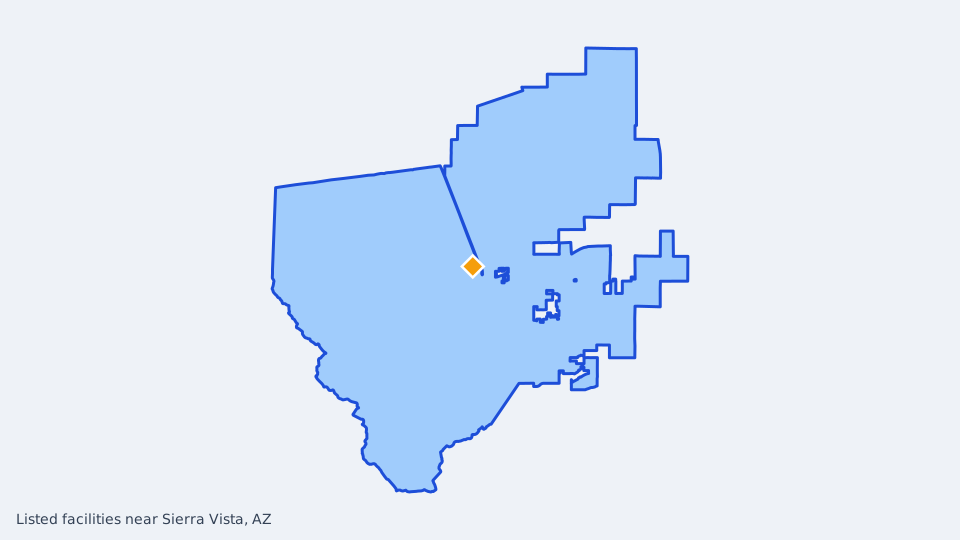
Nothing is listed in Sierra Vista, AZ yet. The nearest options and nearby cities are below.
Call (877) 712-7713Free · ConfidentialThis number connects to our central helpline, not directly to a listed facility.
You will speak with a real person who understands what you are going through.
The call is free and confidential, with no obligation to move forward.
You will leave the call knowing exactly what happens next.
If you are in or near Sierra Vista and looking into alcohol detox, you may be feeling uncertain about what the first step actually looks like. That is completely understandable. A medical detox program is designed to help you stop drinking safely while staff monitor your physical stability around the clock.
The first day usually involves a medical assessment to understand your health history and current symptoms, followed by a plan that might include medication and round-the-clock nursing support to manage withdrawal symptoms as comfortably as possible. Because no local detox options are available within Sierra Vista, the nearest verified programs are located in Tucson, about 57 miles away. These programs can serve as an important starting point for medically supervised care.
Call (877) 712-7713
Detox is the first step. It is medically supervised withdrawal from alcohol. You stay in a facility for a few days to a week.
Medical staff manage symptoms. It is for people who need 24-hour monitoring during the initial detox phase. Residential treatment comes after detox.
You live at the facility for 30 to 90 days. It provides structured therapy and counseling. It helps you build skills for long-term sobriety.
Outpatient care allows you to live at home. You attend therapy sessions during the day. It works best for people with mild withdrawal risk who have a stable home environment.
To choose between them, ask your doctor about your withdrawal risk and your personal support system.
Call (877) 712-7713Round-the-clock medical monitoring while your body clears alcohol safely.
You live on site for weeks, with therapy and structure every day.
Scheduled sessions while you keep living at home and working.
Ongoing support and check-ins that help sobriety last.
When you call a program, ask: What medical staff are on site 24 hours a day? Do you use medication to ease withdrawal symptoms? Is there a medical doctor available daily?
What happens after detox – do you help arrange next-step care? Can you verify that your state licenses the facility? Is the detox unit separate from other residents?
What happens if I have a medical emergency during detox? Do you accept my health insurance? How much will it cost without insurance?
Do you have a discharge plan for me after detox ends?
Private insurance is the most frequent payment method for alcohol detox in Arizona, but confirming coverage with both your insurer and the facility is critical. Public health insurance through AHCCCS may cover detox at facilities that contract with the state, though you must verify your specific plan and eligibility. Sliding-scale fees based on income are offered by some centers for those without coverage, and self-pay arrangements can be made as well.
Always contact the facility directly to clarify payment options and any available assistance programs.
To choose between nearby options, consider these concrete criteria. First, check state licensing. The facility should have a valid license for detox services.
Second, look at staffing. A good program has a doctor or nurse practitioner assigned to each patient. Third, ask about medication options.
Many detox programs use benzodiazepines to prevent seizures. Fourth, verify they can handle medical complications like high blood pressure or history of seizures. Fifth, ask about transfer agreements with a local hospital.
Sixth, look at the duration. Quality detox programs last at least 72 hours, longer for severe cases. Seventh, check aftercare planning.
Good programs help you arrange residential or outpatient follow-up before you leave.
If you are in or near Sierra Vista and looking into alcohol detox, you may be feeling uncertain about what the first step actually looks like.

Severe alcohol withdrawal is a medical emergency. Symptoms can include confusion, rapid heart rate, fever, seizures, or hallucinations (seeing things that are not there). Do not wait at home.
Call 911 immediately. Do not try to detox alone or with home remedies. Go to your nearest emergency room.
Tell them you are withdrawing from alcohol. Emergency medical staff can stabilize you and prevent life-threatening complications.
If you or someone else is in immediate danger, call 911 now.
Call (877) 712-7713No verified facilities within 50 miles of Sierra Vista, AZ. The nearest listed facilities are shown below.
6944 East Tanque Verde Road, Tucson, AZ, 85715
Active
6400 East Grant Road, Suite 170, Tucson, AZ, 85715
Active
3601 South 6th Avenue, SUDTP Mail Code 4-116B, Tucson, AZ, 85723
Active
Free and confidential. Call any time.
Intake usually starts with a health screening and a discussion about your alcohol use, medical history, and any other substances. Staff will check your vital signs and may run simple lab work. Based on results, they create a withdrawal management plan, often using medication to keep you comfortable throughout detox.
It is not recommended to drive yourself, especially if you are experiencing withdrawal symptoms like anxiety, nausea, or shakiness. During detox your reaction time and judgment may be affected. Arrange for a family member, friend, or ride service to take you. If you have a medical emergency, call 911.
Most alcohol detox programs last 3 to 7 days. The worst symptoms often peak in the first 24 to 48 hours. Your detox length depends on your drinking history and medical needs. The staff will decide when you are medically stable to move on.
Yes. Delirium tremens (DTs) is a severe withdrawal syndrome that can be fatal. Symptoms include confusion, rapid breathing, and seizures. It is not the same as a drug overdose. But it is equally dangerous. Medical detox greatly reduces this risk.
Detox is just the start. It treats the physical dependence but not the behavioral addiction. Without follow-up care, relapse rates are high. Long-term success usually requires residential or outpatient treatment after detox.
Last updated