 Sentinel Alcohol Detox

Davis Behavioral Health Inc
2.2 mi, Layton2250 North 1700 West, Layton, UT, 84041
Active
- Residential
- Detox
- Medication-assisted treatment
- Medicaid
City
6 options near Layton, UT, nearest first. Compare services and locations, then call to check availability.
This number connects to our central helpline, not directly to a listed facility.
If you're in or near Layton and looking for alcohol detox, the first step is usually a phone call to a program to ask about its intake process. During an initial appointment, a clinician will assess your history and discuss what kind of support you need. Medical detox for alcohol typically involves 24-hour monitoring and medication to manage withdrawal symptoms, but not every program offers this level of care.
Call ahead to confirm the services available and what to bring on your first day.

Detox is the first step when you stop drinking. It means 24-hour medical monitoring to manage withdrawal safely. Residential care is live-in treatment after detox, with daily therapy and no outside distractions.
Outpatient care lets you live at home and attend therapy sessions a few times a week. You choose by how severe your drinking is: if you have shakes, seizures, or heavy daily use, start with detox. If your drinking is heavy but not daily, residential may be a good next step.
Outpatient is best for people who have already been through detox or residential and need ongoing support.
Ask if they have a medical doctor on staff 24 hours a day. Ask how they handle severe withdrawal symptoms like seizures. Ask what medications they use, and if the program tapers you off or stops suddenly.
Ask if they accept your insurance. Ask what happens after detox: do they help you transition to residential or outpatient? Ask about the daily schedule and if you can leave the facility.
Ask about the cost and any hidden fees.
Payment for alcohol detox in Utah commonly involves private insurance, with many plans covering at least a portion of the stay; it is essential to verify your specific coverage and any network restrictions directly with the facility. Public coverage through Medicaid may be available for eligible individuals, though not all programs accept it, so confirming eligibility is advised. Some facilities offer sliding-scale fees based on income, and self-pay options are also usually available for those without insurance or who prefer to pay directly.
Reach our free, confidential helpline any time, day or night.
A short conversation helps match you with the right level of care.
If needed, withdrawal is managed safely under medical supervision.
You leave with a clear plan for ongoing treatment and support.
Compare how close the program is to your home. You may need to visit daily or stay for weeks. Look at the program's admission criteria: some only take people with insurance, others have sliding scale fees.
Check if they offer separate detox and residential or combine them. Ask how long the wait is for a bed. If you have a co-occurring mental health condition like depression, ask if they have a psychiatrist on staff.
Choose a program that matches your schedule: some offer evening outpatient groups, others are daytime only.
If you're in or near Layton and looking for alcohol detox, the first step is usually a phone call to a program to ask about its intake process.

If you or someone you are with is having a seizure, shaking violently, confused, or seeing things that are not there, this is a medical emergency. Call 911 right now. Do not wait.
Severe alcohol withdrawal can be deadly. Do not try to detox alone if these symptoms appear. You need immediate hospital care.
If you or someone else is in immediate danger, call 911 now.
2250 North 1700 West, Layton, UT, 84041
Active
5475 South 500 East, Ogden, UT, 84405
Active
811 North Harrisville Road, Ogden, UT, 84404
Active
850 East 300 South, Unit 1, Salt Lake City, UT, 84102
Active
700 East 667 South, Salt Lake City, UT, 84101
Active
1875 South Redwood Road, Salt Lake City, UT, 84104
Active
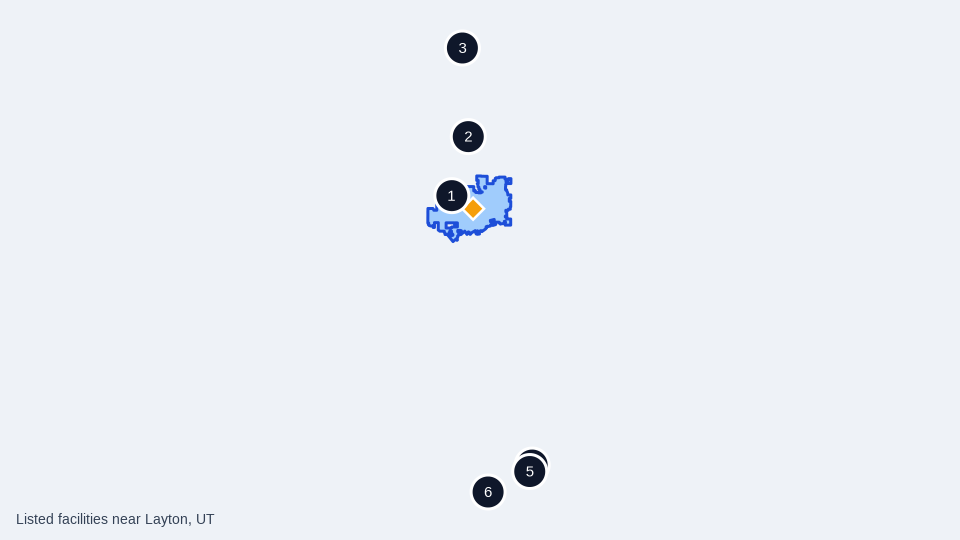
These lists use only what the 6 active facilities listed for Layton report to SAMHSA's FindTreatment.gov. No facility pays to be included or can ask to be moved. Reporting more options is not a measure of quality, outcomes or suitability for any person. A missing option means the facility did not report it to the source, not that it is not offered. Call the facility to confirm everything before relying on it.
How this list is made: each facility scores one point for each of these 5 levels of care (settings) it reports to SAMHSA's FindTreatment.gov (Residential (24-hour); Outpatient; Intensive outpatient; Partial hospitalization / day treatment; Hospital inpatient). A facility needs at least 3 to appear. Facilities are shown from the highest count to the lowest; facilities with the same count are in alphabetical order, which has no other meaning. Up to 10 are shown.
How this list is made: each facility scores one point for each of these 7 payment and cost-assistance options it reports to SAMHSA's FindTreatment.gov (Medicaid; Medicare; Private health insurance; Military insurance (TRICARE); Cash or self-payment; Sliding fee scale; Payment assistance). A facility needs at least 4 to appear. Facilities are shown from the highest count to the lowest; facilities with the same count are in alphabetical order, which has no other meaning. Up to 10 are shown.
How this list is made: each facility scores one point for each of these 4 medications used in treatment it reports to SAMHSA's FindTreatment.gov (Buprenorphine; Methadone; Naltrexone; Medication for alcohol use disorder). A facility needs at least 2 to appear. Facilities are shown from the highest count to the lowest; facilities with the same count are in alphabetical order, which has no other meaning. Up to 10 are shown.
How this list is made: each facility scores one point for each of these 12 age groups and client groups accepted it reports to SAMHSA's FindTreatment.gov (Adolescents; Young adults; Adults; Seniors; Pregnant or postpartum women; Adult women; Adult men; Veterans; Active duty military; Criminal justice clients; Clients who have experienced trauma; Co-occurring mental and substance use disorders). A facility needs at least 5 to appear. Facilities are shown from the highest count to the lowest; facilities with the same count are in alphabetical order, which has no other meaning. Up to 10 are shown.
Alcohol detox typically lasts between five and seven days, but the length depends on your level of alcohol use and any medical needs. Ask the program you call about its typical detox timeline and what happens after the withdrawal phase.
Some programs accept walk-ins or self-referrals, while others require a doctor's referral. Call the detox center ahead of time to ask about its admission process and what paperwork you need to bring.
Most detox programs for alcohol last 3 to 7 days. The worst symptoms usually happen in the first 48 to 72 hours. Your body needs time to adjust to being without alcohol. The length depends on how much and how long you were drinking.
Common medications include benzodiazepines like Valium or Librium to prevent seizures and reduce anxiety. Other medications like clonidine help with high blood pressure. Some programs use vitamins like thiamine to prevent brain damage.
If you drink alcohol daily or in heavy amounts, stopping can be dangerous. Signs you need detox include morning shakes, nausea, sweating, or a strong craving. If you have had withdrawal symptoms before, a medical detox is likely needed.
Last updated