 Sentinel Alcohol Detox

Kona Community Hospital
55.6 mi, Kealakekua79-1019 Haukapila Street, Kealakekua, HI, 96750
Active
City
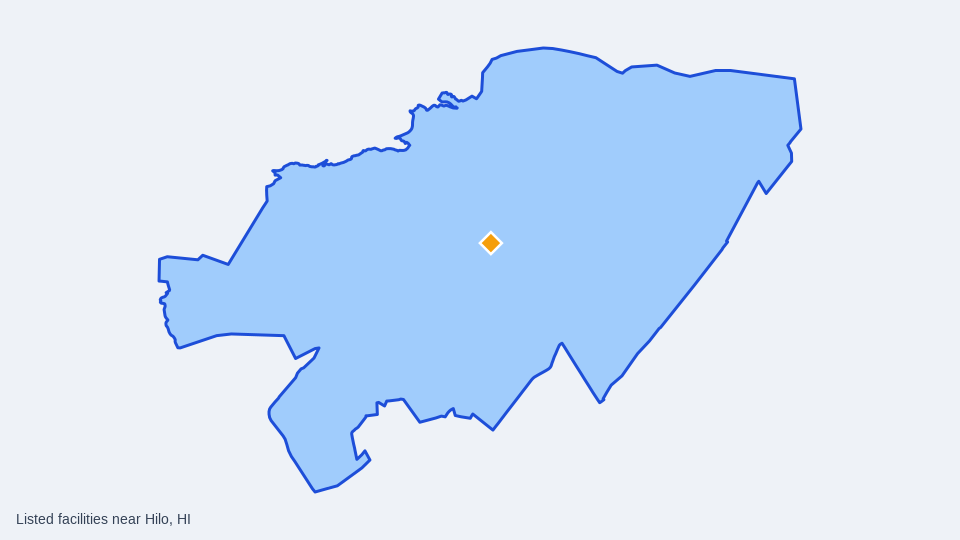
No listed facilities are in Hilo. The nearest listed facility is 55.6 miles from Hilo. Compare the facilities near Hilo below; distances are straight-line estimates.
This number connects to our central helpline, not directly to a listed facility.
If you are looking for alcohol detox care in or near Hilo, the first day usually starts with a medical assessment to understand your situation and needs. Ask each program what its intake process involves, what services it offers and how it handles the start of care.

Detox is the first step when you stop drinking. It means 24-hour medical monitoring to manage withdrawal safely. Residential care is live-in treatment after detox, with daily therapy and no outside distractions.
Outpatient care lets you live at home and attend therapy sessions a few times a week. You choose by how severe your drinking is: if you have shakes, seizures, or heavy daily use, start with detox. If your drinking is heavy but not daily, residential may be a good next step.
Outpatient is best for people who have already been through detox or residential and need ongoing support.
Ask if they have a medical doctor on staff 24 hours a day. Ask how they handle severe withdrawal symptoms like seizures. Ask what medications they use, and if the program tapers you off or stops suddenly.
Ask if they accept your insurance. Ask what happens after detox: do they help you transition to residential or outpatient? Ask about the daily schedule and if you can leave the facility.
Ask about the cost and any hidden fees.
Payment for alcohol detox in Hawaii typically involves private insurance from commercial carriers, with many plans covering detox as part of substance use treatment. Public health coverage through Hawaii's Medicaid program (Quest Integration) or Medicare may apply for eligible residents, but specific acceptance should be confirmed ahead of time. For those without insurance, some centers adjust fees on a sliding scale according to ability to pay, and direct self-payment is an option as well.
It is essential to contact the facility directly to discuss payment terms and eligibility before admission.
Compare how close the program is to your home. You may need to visit daily or stay for weeks. Look at the program's admission criteria: some only take people with insurance, others have sliding scale fees.
Check if they offer separate detox and residential or combine them. Ask how long the wait is for a bed. If you have a co-occurring mental health condition like depression, ask if they have a psychiatrist on staff.
Choose a program that matches your schedule: some offer evening outpatient groups, others are daytime only.
If you are looking for alcohol detox care in or near Hilo, the first day usually starts with a medical assessment to understand your situation and needs.

If you or someone you are with is having a seizure, shaking violently, confused, or seeing things that are not there, this is a medical emergency. Call 911 right now. Do not wait.
Severe alcohol withdrawal can be deadly. Do not try to detox alone if these symptoms appear. You need immediate hospital care.
If you or someone else is in immediate danger, call 911 now.
No verified facilities within 50 miles of Hilo, HI. The nearest listed facilities are shown below.
79-1019 Haukapila Street, Kealakekua, HI, 96750
Active
45-035 Kuhonu Place, Kaneohe, HI, 96744
Active
45-845 Pookela Street, Kaneohe, HI, 96744
Active
Alcohol detox is the process of allowing the body to clear alcohol while managing withdrawal symptoms under medical supervision. It is often the first step in a longer treatment plan.
You can search for programs that offer alcohol detox services and then call each one to confirm availability, admission requirements and what is covered by your insurance.
Most detox programs for alcohol last 3 to 7 days. The worst symptoms usually happen in the first 48 to 72 hours. Your body needs time to adjust to being without alcohol. The length depends on how much and how long you were drinking.
Common medications include benzodiazepines like Valium or Librium to prevent seizures and reduce anxiety. Other medications like clonidine help with high blood pressure. Some programs use vitamins like thiamine to prevent brain damage.
If you drink alcohol daily or in heavy amounts, stopping can be dangerous. Signs you need detox include morning shakes, nausea, sweating, or a strong craving. If you have had withdrawal symptoms before, a medical detox is likely needed.
Last updated